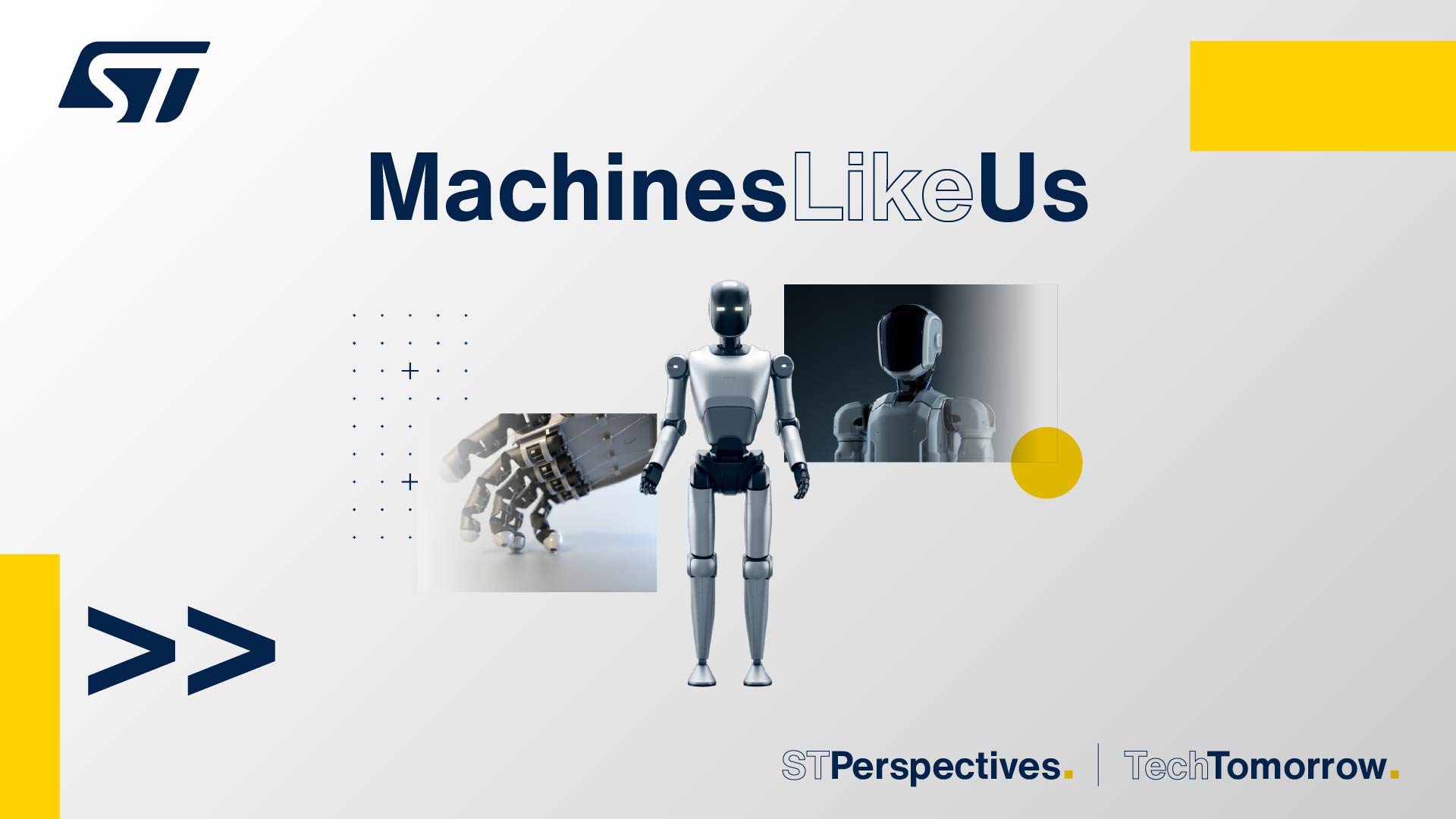
Humanoid robotics technology is entering a more operational phase: fewer one-off demo videos, more discussion of pilots, manufacturing readiness, and the “boring” details that decide whether a humanoid can do repeatable work safely.
At the same time, the public discourse is noisy—mixing credible engineering constraints (actuators, perception, planning, safety) with aggressive timelines and speculative market sizing. This brief separates verifiable signals from unverified claims and gives operators and buyers a practical evaluation checklist.
Quick answer
Humanoid robotics in 2026 is best described as early commercialization pressure meeting unresolved operational basics. Public sources indicate increased emphasis on industrial pilots and manufacturing ecosystem build-out (including components like actuators and platform stacks) rather than purely academic prototypes. But many widely repeated statements—especially about unit counts, “production lines,” home delivery, and near-term mass adoption—are not consistently verifiable from primary documentation.
Why it matters: if you’re an operator, founder, investor, or distributor, the differentiator is no longer “can it walk?” but can it do a bounded job safely, with measurable uptime, maintainability, and a support model, and can the vendor document the safety and cybersecurity posture.
Context: what “humanoid robot technology” actually covers
A humanoid robot is generally understood as a robot with a human-like body plan (often including a torso, arms, and legs), designed to operate in human environments and/or use human tools. Overviews such as Wikipedia summarize common application categories (research, medical, entertainment), plus core technology areas like sensors, actuators, and planning/control. Wikipedia: Humanoid robot
For operators, “humanoid robotics technology” is not one feature—it’s a stack:
- Mechanics and actuation: torque density, backdrivability, thermal limits, wear, service intervals.
- Sensing: proprioception (joint position/torque/IMU) and exteroception (vision, depth, force/ tactile where applicable).
- Locomotion and manipulation control: stable walking under load; grasping; compliant contact.
- Perception and task planning: scene understanding, object pose estimation, policy execution.
- Safety system: emergency stop architecture, collision limiting, monitoring, procedures.
- Deployment operations: installation, training, maintenance, failure recovery, and support.
A key operator-facing signal from component suppliers is cost structure: Schaeffler states that actuators can represent around 50% of the bill of materials (BOM) in many humanoid robots. That claim is directionally important because it implies that scaling humanoids is not only a software problem; it’s also about high-volume, high-reliability actuation with supply chains that can support service. Schaeffler: Humanoid robots
What’s changing in 2026 (based on public signals)
1) Narrative shift: from demos to bounded pilots
HumanoidHub’s own 2026 brief frames a shift toward early industrial pilots and a widening ecosystem of simulation/compute aimed at repeatable work, while emphasizing that operators should probe gaps in deployments and pricing. HumanoidHub: pilots to production (what’s real, what’s not)
Practical interpretation: if a vendor is serious about pilots, they should be able to discuss:
- a job definition (tasks, cycle time, payload, reach)
- facility constraints (floors, aisles, lighting, PPE requirements)
- human-robot interaction procedures
- logging and incident reporting
- maintenance plan and spare parts
2) “Production lines” and scale claims are often second-hand
A LinkedIn article (behind sign-in for many readers) references Europe getting “2 humanoid robot production lines,” but LinkedIn posts are typically secondary commentary rather than a primary manufacturing disclosure (e.g., audited production capacity, shipped units, or certified lines). Treat this as a lead to investigate, not as evidence of scale by itself. LinkedIn: Koetsier post
Operator takeaway: when you hear “production line,” ask for a plain-English definition:
- Is it an internal pilot line, a contract manufacturer line, or a planned line?
- What is the throughput (units/week or units/month) and what date?
- What is the QA regime (acceptance tests, burn-in, traceability)?
3) Research consensus: “humanoid AI” is broad, readiness is uneven
The arXiv review Humanoid Robots and Humanoid AI: Review, Perspectives and Directions argues that recent AI advances have increased interest in interactive, multimodal humanoids and proposes terminology and perspectives for “humanoid AI.” It is a review and framing piece, not a deployment report—useful for understanding research direction, less useful for verifying near-term commercial capability. arXiv: 2405.15775v2
Practical interpretation: when vendors reference “foundation models” or “humanoid AI,” you still need on-site answers:
- What failure modes were observed in real facilities?
- What is the monitoring and rollback mechanism?
- What data is collected, where stored, and who can access it?
Why it matters: the operator’s bottlenecks are not the headline features
Reliability and maintainability decide ROI
Walking is a prerequisite; repeatability is the product. A humanoid that can do a task 60% of the time may look impressive on video, but can be operationally unusable if it requires constant resets or expert babysitting.
BOM and actuation economics shape pricing
If actuators are a major portion of BOM (Schaeffler’s claim: ~50% in many humanoids), then long-term pricing is constrained by:
- motor and gearbox costs
- sensorized joints
- thermal management
- manufacturing yield
- service life under load cycles
This is why “mass-market price soon” claims should be treated skeptically unless paired with manufacturing evidence and a service model.
Cybersecurity risk is a real deployment constraint
Recorded Future highlights humanoid robots as likely cyber targets (hijacking, data leaks, botnets) and calls for rigorous cybersecurity standards. While the report includes speculative long-horizon projections, the security point is practical: humanoids combine mobility + manipulation + network connectivity, which raises the consequence of compromise. Recorded Future: The Future of Humanoid Robotics
Operator implication: require a security review similar to other connected industrial systems (auth, patching, logging, incident response, data governance).
Numbers, in plain English (and what’s unclear)
Public sources in this brief contain few auditable near-term numbers (units shipped, fleet hours, MTBF, $/hour economics). The most concrete numeric signal provided here is the component cost share claim from Schaeffler (actuators ~50% of BOM in many humanoids). That implies:
- If actuator cost is not reduced (or reliability not improved), unit economics remain tight.
- A vendor claiming dramatic price drops should explain whether it comes from actuator redesign, supplier change, volume discounts, or a different architecture.
Other numeric claims appear in market/forecast content (e.g., Recorded Future’s long-range statements). Treat these as scenario analysis rather than operational commitments.
What remains unclear from the provided sources (and is often missing in public announcements):
- Deployed unit counts at named customer sites
- Operating hours (total fleet hours; hours between human intervention)
- Task success rates measured over weeks/months
- Safety case details (standards used, hazard analysis, incident history)
- Support model (SLA, parts availability, field tech coverage)
Practical implications: how to evaluate a humanoid for your facility
Use this checklist to convert “humanoid robotics technology” into procurement-grade questions.
1) Define the job before you compare robots
- Task: pick/place, kitting, tote handling, machine tending, inspection, etc.
- Payload and reach requirements
- Cycle time and duty cycle
- Acceptable error rate and recovery procedure
2) Ask for evidence that matches your environment
- Videos are helpful, but request logs and repeatability data.
- Ask whether the robot has run the task for multiple shifts, not minutes.
3) Require a safety and training plan
- Emergency stop behavior
- Speed and separation monitoring approach (if any)
- Operator training materials and SOPs
4) Treat cybersecurity as part of acceptance
- Network segmentation requirements
- Update mechanism and cadence
- Access control, telemetry, and data retention
5) Pilot design: structure it like an operations test
Agility Robotics publishes a “deployment process” resource (general guidance rather than a universal standard), which is useful as a reference for what a serious deployment motion can look like: scoped objectives, site readiness, validation, and iteration. Agility Robotics: deployment process
Competitive/context notes (careful comparisons only)
Listicles such as “Top 12 Humanoid Robots of 2026” can help you build a longlist, but they often blend marketing claims (e.g., “delivered to homes”) with uneven sourcing. Use them for discovery, then verify each claim via primary sources (manufacturer specs, customer case studies, third-party audits). Humanoid Robotics Technology: Top 12 of 2026
Similarly, corporate explainers (e.g., KUKA’s humanoid robot page) are useful for framing why industry cares, but they are not deployments evidence. KUKA: Humanoid robot
What we can responsibly say from the provided sources:
- Ecosystem players (robot makers, component suppliers, platform providers) are investing in humanoids.
- The conversation is shifting toward pilots, manufacturability, and operational maturity.
What we cannot verify from these sources alone:
- Which specific humanoid platforms are shipping at scale.
- Confirmed production throughput for any “production line” claim.
- Comparative performance benchmarks across robots on the same task.
What we are not concluding (to avoid overreading the story)
- We are not concluding that humanoids have reached broad, unattended autonomy in industrial settings.
- We are not concluding that near-term mass production is guaranteed; “production line” language needs primary confirmation.
- We are not concluding that “humanoid AI” framing implies a solved manipulation-and-safety stack; research direction is not deployment readiness.
What to watch next
- Pilot transparency: look for vendors publishing task definitions, fleet hours, and intervention rates.
- Component roadmaps: actuator reliability, cost-down plans, and serviceability signals (suppliers like Schaeffler are one indicator).
- Safety and standards alignment: clearer documentation of hazard analysis, training, and facility integration.
- Security posture: formal security documentation, coordinated vulnerability disclosure, and enterprise controls.
Where to go next (HumanoidHub)
- Explore the broader landscape: /explore
- Browse the robot catalog for source-backed profiles: /robots
- Compare platforms side-by-side (when data is available): /compare
- Browse more operator-focused coverage: /blog
FAQ
Q1: What is a humanoid robot in practical terms?
A humanoid robot is a robot with a human-like body plan—often including a torso, arms, and legs—intended to operate in spaces designed for humans or use human tools, as summarized in the general definition and taxonomy overviews such as Wikipedia’s “Humanoid robot” entry. Source
Q2: Why are actuators so important in humanoid robotics technology?
Actuators matter because they drive nearly every motion (walking, balancing, lifting, grasping), and component suppliers like Schaeffler state actuators can represent around 50% of the bill of materials (BOM) in many humanoid robots—making actuator cost and reliability central to unit economics and serviceability. Source
Q3: Are humanoid robots in “mass production” in 2026?
Public commentary sometimes references “production lines,” but the provided sources do not consistently offer primary, auditable disclosures of throughput, shipped unit counts, or certified manufacturing capacity; buyers should request evidence such as acceptance-test data, QA processes, and delivered fleet counts from the vendor. Example secondary source
Q4: What is the biggest operational risk when piloting a humanoid robot?
A common operational risk is the gap between a controlled demo and real facility conditions—where repeatability, recovery from errors, maintenance burden, and safety procedures determine whether a humanoid robot can do a bounded task over weeks, not minutes. This aligns with the “pilots vs. production” framing discussed in HumanoidHub’s 2026 coverage. Source
Q5: Why is cybersecurity part of humanoid robot evaluation?
Cybersecurity matters because a network-connected humanoid robot combines data access with physical capability, and Recorded Future’s research highlights risks such as hijacking and data leaks—so operators should require authentication, patching, logging, and incident-response processes comparable to other industrial connected systems. Source
Sources
- https://www.humanoidhub.ai/blog/humanoid-robotics-2026-pilots-production-what-s-real-what
- https://www.schaeffler.com/en/technology-innovation/technology/humanoid-robots
- https://arxiv.org/html/2405.15775v2
- https://www.recordedfuture.com/research/future-humanoid-robotics
- https://en.wikipedia.org/wiki/Humanoid_robot
- https://www.kuka.com/en-us/knowledge/humanoid-robot
- https://www.agilityrobotics.com/content/agilitys-humanoid-deployment-process
- https://humanoidroboticstechnology.com/articles/top-12-humanoid-robots-of-2026
- https://www.linkedin.com/pulse/hello-openai-europe-gets-2-humanoid-robot-production-lines-koetsier-3dzhe