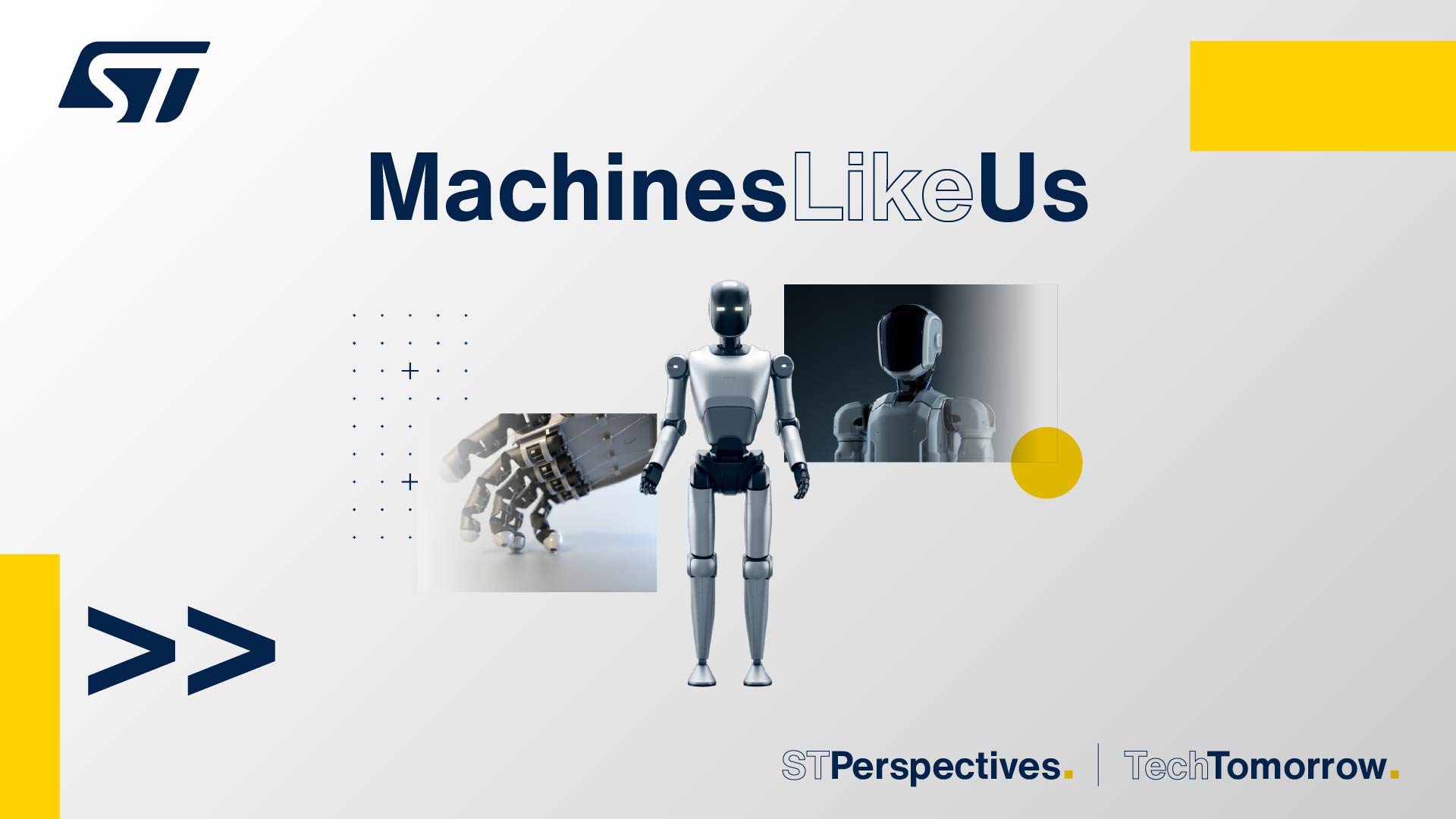
Recent humanoid-robotics headlines are increasingly framed around “mass production” and factory deployment. Two notable signals: a LinkedIn post from Humanoid Robotics Technology stating AGIBOT rolled out its “5,000th mass-produced humanoid robot”, and a BMW Group press release describing a first deployment of humanoid robots in production in Germany as part of a pilot at Plant Leipzig.
For operators and buyers, these announcements matter—but mainly as inputs to due diligence, not as proof that a given humanoid platform is ready for your line, safety case, or uptime requirements.
Quick answer
What happened: Public reporting and corporate comms highlighted (1) a claimed 5,000th unit milestone for AGIBOT via a Humanoid Robotics Technology LinkedIn post, and (2) BMW Group’s plan to deploy humanoid robots in production in Germany for the first time, following a pilot completion in the US, per BMW’s official press release.
Why it matters for humanoid robotics: The industry is shifting from prototypes and demos toward larger unit counts and real production environments—but the public record still often omits the operational details that determine whether “mass production” translates into repeatable deployments (robot-hours, duty cycle, incident rates, maintenance burden, and support capacity).
The two signals, separated cleanly
1) AGIBOT’s “5,000th mass-produced humanoid” claim (what we know)
A LinkedIn post from Humanoid Robotics Technology states that AGIBOT announced the roll-out of its 5,000th mass-produced humanoid robot, and links to an external “full announcement” via a redirect link. The LinkedIn post itself is the accessible, citable artifact in the provided sources.
What is not disclosed in the provided source context:
- What “roll-out” means operationally (shipped to customers vs. built vs. deployed on-site).
- What “mass-produced” means (rate per week/month, production line characteristics, QA yields).
- Whether the 5,000 units are the same model/configuration and whether they share a common safety certification pathway.
- Where the robots are operating, what tasks they do, and how many hours they have accumulated.
Source: Humanoid Robotics Technology LinkedIn post referencing the milestone. (Link)
2) BMW Group: humanoids in production in Germany (what we know)
BMW Group’s press release (dated 27.02.2026) states BMW will deploy humanoid robots in production in Germany for the first time, describing:
- A pilot project at BMW Group Plant Leipzig.
- A new “Center of Competence for Physical AI in Production” to accelerate integration of AI and robotics in production.
- That a first pilot deployment of humanoid robots was successfully completed at BMW Group Plant Spartanburg (USA).
BMW’s statement is valuable because it ties humanoids explicitly to production operations rather than labs or trade-show demos—but it still doesn’t (in the excerpted context provided) specify unit count, robot model/vendor, tasks, cycle times, or safety architecture.
Source: BMW Group press release. (Link)
Context: why “mass production” is hard to interpret in humanoids
In humanoid robotics, the words production, deployment, and mass-produced can refer to very different realities:
- Produced: units assembled (possibly for internal testing).
- Shipped: units delivered to a site (not necessarily integrated).
- Deployed: robots operating in a workflow with trained staff and defined SOPs.
- Scaled: repeatable deployments across sites with measurable uptime and support.
HumanoidHub previously published an operator-facing checklist on verifying “mass production” claims—highlighting that public announcements rarely include the specific metrics that matter for procurement. If you’re using today’s milestone headlines to inform buying decisions, treat them as signals to investigate, not as evidence of readiness.
Reference: HumanoidHub’s earlier brief on what to verify in mass production claims. (Link)
The numbers, in plain English (and what they do—and don’t—prove)
“5,000th humanoid”
If accurate, 5,000 units would be a meaningful scale signal in a category where many vendors still show limited pilot fleets publicly. But a unit count alone does not answer:
- How many are working daily vs. stored, staged, or in rework.
- How many robot-hours have been accumulated.
- What failure modes dominate (hands, joints, perception, thermal limits, battery degradation).
- Support model maturity (spares, turnaround time, on-site technicians).
In other words: 5,000 units might indicate manufacturing capability or inventory, but without deployment telemetry it does not automatically translate into operational reliability.
Source for the numeric claim: the LinkedIn post cited above.
“BMW deploying humanoids in Germany for the first time”
BMW’s statement is not a unit-count claim; it’s an operations intent and pilot progression claim. The practical interpretation for operators:
- BMW is treating humanoids as a production-relevant technology worth piloting.
- The creation of a competence center signals organizational investment, which often correlates with more rigorous integration work (process engineering, safety, training), even if the robot hardware is early.
What remains unknown from the provided release excerpt:
- Which humanoid vendor(s) are involved.
- Which tasks are targeted (e.g., kitting, machine tending, line-side logistics).
- Success criteria (throughput, ergonomic benefit, quality impact).
Source: BMW press release cited above.
Why this matters (operators, founders, investors)
For robotics operators and plant teams
These announcements change the conversation from “Can it walk?” to “Can it hold a station?” The key shift is integration:
- If BMW is willing to pilot humanoids in production, it raises the bar for vendors on safety case documentation, SOP design, and support readiness.
- A claimed multi-thousand-unit milestone increases the odds that a vendor has learned something about manufacturing repeatability—but operators still need proof of repeatable performance in their environment.
For founders and engineering teams
“Mass production” headlines create expectations. The teams that win procurement cycles tend to show:
- Clear definitions of deployment, commissioning, and acceptance testing.
- Evidence of robot-hours and MTTR (mean time to repair), even if MTBF is still evolving.
- A credible spares and service pipeline.
For investors and distributors
Milestones can be real, but the diligence question is: do they map to revenue quality and renewals? Ask:
- Are these units sold, leased, or internally deployed?
- What is the attach rate for service contracts?
- How many field techs and partner integrators exist per deployed robot?
Practical implications: a verification checklist you can use this week
Use this as a lightweight RFI/RFQ addendum when a vendor cites “mass production” or a large deployment number:
- Define the unit metric
- “Built,” “shipped,” “installed,” or “operating”? Require one.
- Ask for robot-hours, not robot-count
- Total fleet robot-hours in the last 90 days.
- Median robot-hours per unit.
- Duty cycle and task constraints
- Continuous operation limits (thermal, battery swap, recharge time).
- Payload and reach in the actual task posture.
- Safety and compliance
- Risk assessment artifacts (even if site-specific).
- Safety-rated functions, E-stops, speed/force limiting approach.
- Service model
- Spare parts list and lead times.
- On-site support SLA.
- Required technician training hours.
- Integration surface area
- APIs for MES/WMS, teleop stack, logging, and incident reporting.
Competitive / market context (careful, source-bounded)
The provided sources also point to broader industry coverage streams (e.g., Humanoid Robotics Technology’s “Humanoid Production” category). That suggests multiple vendors are using similar “production” framing, but this brief does not have enough vendor-specific primary documentation (beyond BMW’s press release and the AGIBOT LinkedIn claim) to rank readiness across companies.
What we can say, verifiably:
- BMW’s statement is a named enterprise end-user (automotive manufacturing) explicitly moving pilots into Germany.
- The AGIBOT milestone is a public claim repeated by a third-party industry news account on LinkedIn, but the underlying announcement content is not included in the accessible sources here.
What we are not concluding (uncertainty, explicitly)
- We are not concluding that AGIBOT has 5,000 robots operating in customer facilities; the provided accessible source only supports that the milestone was announced.
- We are not concluding that BMW’s Germany deployment implies broad, sustained humanoid usage across BMW plants; it is described as a pilot project and an organizational initiative.
- We are not concluding anything about ROI, safety performance, or uptime for either case because those metrics are not present in the provided sources.
What to watch next
-
Primary documentation for the 5,000-unit claim Look for a vendor-controlled announcement page that clarifies whether the count is built vs. deployed, plus time window and geography.
-
BMW pilot details Watch for follow-up technical notes: task scope, robot vendor identification, acceptance criteria, and whether the pilot expands beyond a single line/cell.
-
Service capacity signals As unit counts rise, service maturity becomes visible through: regional spares hubs, certified integrator programs, and published maintenance procedures.
-
Standardization and safety case reuse The industry will move faster when buyers can reuse parts of a safety case across sites and tasks. Track whether vendors publish structured safety documentation aligned to industrial norms.
Where to go next (HumanoidHub)
- Explore more operator-facing coverage: /explore
- Review manufacturers and ecosystems before shortlisting: /brands
- Compare robots side-by-side (when profiles are available): /compare
FAQ
What does “mass production” mean for humanoid robots?
“Mass production” for humanoid robots can mean units are being manufactured at higher volume, but it does not necessarily mean the robots are deployed, integrated, or achieving high uptime in real facilities. Operators should ask whether the count refers to built, shipped, installed, or operating robots.
Did AGIBOT really deploy 5,000 humanoid robots?
A LinkedIn post from Humanoid Robotics Technology states that AGIBOT announced the roll-out of its 5,000th “mass-produced” humanoid robot. The provided source does not include operational details such as where the robots are deployed, how many are running daily, or total robot-hours, so those points remain unverified here.
What exactly did BMW announce about humanoid robots?
BMW Group announced (27.02.2026) it will deploy humanoid robots in production in Germany for the first time via a pilot at Plant Leipzig, and it stated that a first pilot deployment was successfully completed at its Plant Spartanburg in the USA. The announcement does not specify unit count, robot vendor, or task scope in the excerpted material provided.
Why should factories care about these announcements?
Factories should care because enterprise pilots and large claimed unit milestones can indicate the sector is moving toward repeatable deployments. However, procurement decisions still depend on robot-hours, safety documentation, maintenance burden, integration effort, and support SLAs—details often missing from headline announcements.
What evidence should buyers request before trialing a humanoid robot?
Before trialing a humanoid robot, buyers should request robot-hours, duty cycle limits, failure and repair statistics (MTTR), a clear definition of what counts as “deployed,” safety/risk assessment artifacts, and a support plan covering spares, training, and on-site response times.
Sources
- Humanoid Robotics Technology (LinkedIn): AGIBOT “5,000th mass-produced humanoid” claim: https://www.linkedin.com/posts/humanoid-robotics-technology_agibot-announces-deployment-of-5000th-humanoid-activity-7404443841119805441-LcIm
- BMW Group Press Release (27.02.2026): https://www.press.bmwgroup.com/global/article/detail/T0455864EN/bmw-group-to-deploy-humanoid-robots-in-production-in-germany-for-the-first-time?language=en
- HumanoidHub prior analysis on verifying mass-production claims: https://www.humanoidhub.ai/blog/humanoid-robotics-technology-signals-mass-production-headlines-claimed-5
- Humanoid Robotics Technology “Humanoid Production” category (context stream): https://humanoidroboticstechnology.com/category/news/humanoid-production/