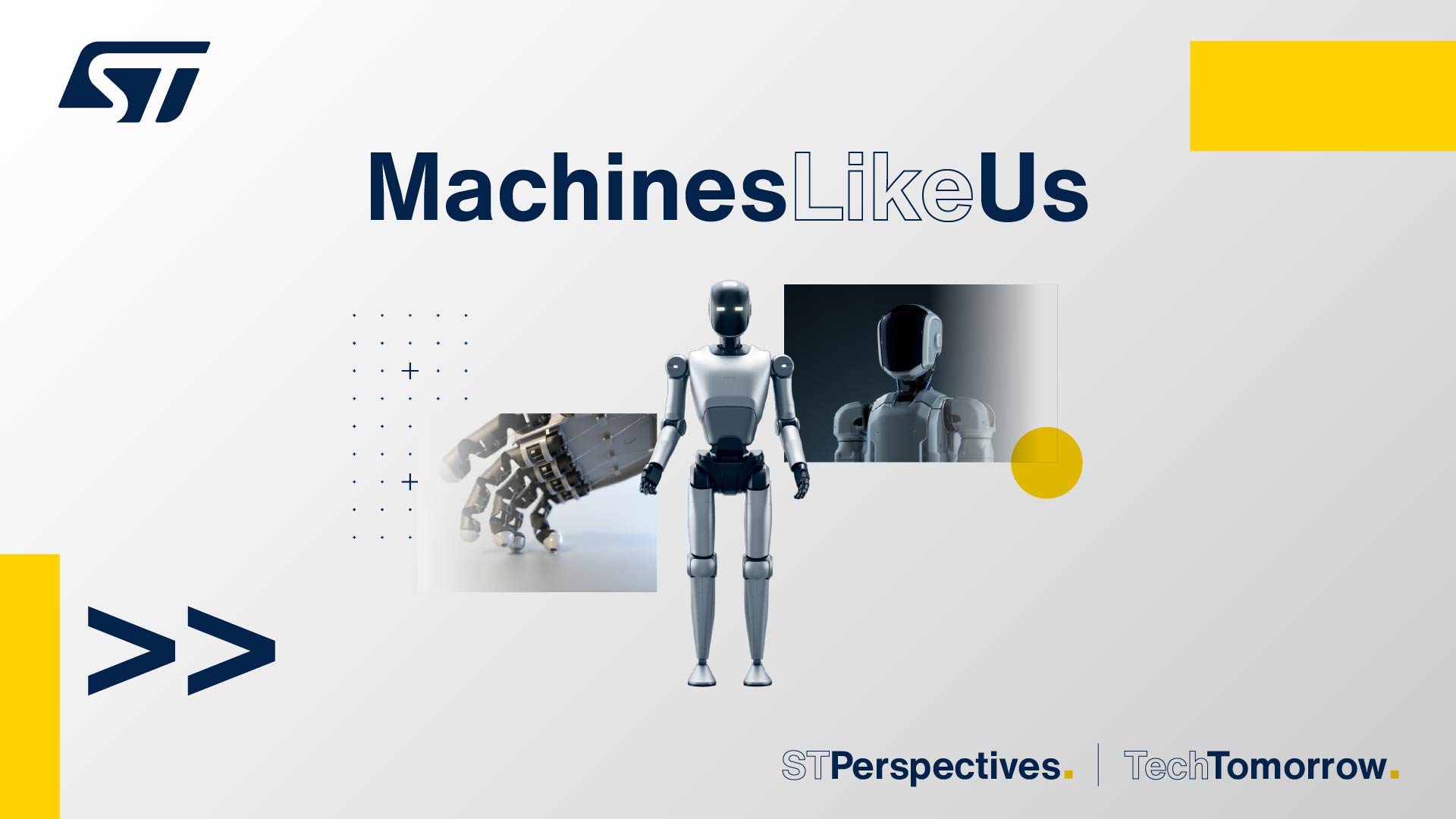
Humanoid robots are starting to show up in places that matter operationally—automotive plants, logistics sites, and supplier roadmaps—not just research labs. The most concrete recent signals are (1) BMW Group saying it will deploy humanoid robots in production in Germany as part of a pilot at Plant Leipzig and (2) UBTECH claiming “mass production and delivery” of its Walker S2 with orders exceeding 800 million yuan. At the same time, vendors like Agility Robotics continue to position humanoids as industrial automation systems with measurable hours, and major component and platform companies are publishing “how it works” views that are useful for buyers building evaluation criteria.
This brief focuses on what can be verified from public sources, what’s still ambiguous, and what operators/investors should ask before treating “humanoid” as a production-ready category.
Quick answer
Humanoid robotics technology is transitioning from prototypes toward early industrial pilots, with BMW Group publicly describing a first-in-Germany production deployment (pilot) and UBTECH publicly claiming mass production/delivery of its Walker S2 with large order value. For humanoid robotics, this matters because it shifts the debate from “can it walk” to “can it run a safe, maintainable process with measurable uptime, throughput, and integration cost.” The gap is that most public announcements still lack the operational details buyers need—unit counts, MTBF/MTTR, shift coverage, safety validation, and total cost per task.
What happened: the most concrete public signals
BMW: a named plant, a named pilot, and a production intent
BMW Group states it will deploy humanoid robots in production in Germany “for the first time,” describing a pilot project at BMW Group Plant Leipzig and referencing prior pilot work at Plant Spartanburg in the U.S. BMW also describes a “Center of Competence for Physical AI in Production” intended to accelerate integration of AI and robotics in production. These are meaningful details because they tie humanoids to a real manufacturing environment rather than a lab or marketing stage.
What BMW does not fully specify in the press release (at least from the headline-level public summary) are the exact robot model(s), unit quantities, the specific tasks (e.g., part presentation, kitting, inspection, machine tending), and the performance/safety metrics used to judge success. Treat the announcement as a high-signal “intent + pilot scope” indicator, not as proof of scaled rollout. Source: BMW Group press release, 27 Feb 2026.
UBTECH: “mass production and delivery” + order value, but little operational detail
UBTECH’s PRNewswire release claims its humanoid robot Walker S2 has begun “mass production and delivery,” and that orders exceed 800 million yuan. In plain English: UBTECH is claiming it has crossed a manufacturing threshold (building and shipping units) and has accumulated signed demand of a large value.
However, the release does not (from the public syndication page) clearly standardize what “mass production” means (e.g., line rate, units/month) nor does it provide task-level deployment evidence (site names, use cases, operating hours). Order value also does not equal delivered units, paid revenue, or successful deployments; it can include framework agreements, options, or staged deliveries. Source: PRNewswire / UBTECH, 17 Nov 2025.
Agility Robotics: positioning around measurable production experience
Agility Robotics’ public site positions Digit as an industrial humanoid system and claims 65,000 hours of real production experience, alongside a cloud platform (“Arc”) for fleet operation. For operators, hours-in-production is a useful metric because it implies sustained operation beyond a short demo—though it still needs clarification: hours across how many robots, at what duty cycle, and performing what tasks? Source: Agility Robotics.
Context: what “humanoid robotics technology” actually includes
A humanoid robot is generally defined by human-like body structure (typically torso, two arms, two legs) and is pursued to operate in human-centric spaces using human tools and infrastructure. Wikipedia’s overview is helpful as a taxonomy: sensors (proprioceptive vs exteroceptive), actuators (electric/hydraulic/pneumatic), and the planning/control stack. Source: Humanoid robot (Wikipedia).
For buyers, the important framing is that “humanoid” is not a single technology upgrade—it is a systems integration problem across:
- Mechanics/actuation (torque density, thermal management, backdrivability, maintenance intervals)
- Perception (robust sensing in clutter, reflective metals, changing lighting)
- Safety (power-and-force limiting, monitored stop, speed & separation, and site procedures)
- Task policy + supervision (how the robot is taught, verified, updated, and rolled back)
- Fleet operations (deployment tooling, monitoring, logging, incident response)
Industry commentary from semiconductor/platform and industrial automation players tends to emphasize these “foundation” layers, even when they are not announcing a specific robot. For example, ST’s blog frames humanoids as “automation built from the sensors up,” highlighting the role of sensors and embedded systems in workforce-scale robotics. Source: ST Blog.
Why it matters (operators, founders, investors)
1) The discussion is moving from demos to factory constraints
BMW tying humanoids to a specific plant pilot matters because factories force hard questions: cycle time, rework handling, downtime recovery, and safety sign-off. A pilot inside a production environment is a stronger signal than a conference demo because it collides with real constraints (shift changes, line balancing, EHS procedures).
2) “Mass production” claims are becoming part of the narrative—buyers should demand definitions
UBTECH’s “mass production and delivery” language is a market signal: vendors expect customers to care about manufacturing capacity and delivery, not just capability videos. But without standardized disclosure (units shipped, backlog, field uptime), the term can be interpreted loosely. Operators should treat it as a prompt to request verifiable documentation.
3) Operational software and integration are becoming differentiators
Agility’s emphasis on a fleet platform (“Arc”) and production hours reflects a broader shift: humanoids are increasingly sold as managed automation systems, not standalone machines. This impacts procurement: you’re buying uptime, tooling, updates, and support processes—often closer to “robot-as-a-service” operations than traditional capex-only industrial robots.
The numbers, in plain English (and what they do not prove)
BMW: “first time in Germany” is a milestone, not a scale claim
BMW’s statement is best interpreted as: “We are moving into a production-adjacent pilot in Germany.” It does not publicly confirm a fleet size, a production line conversion, or a timeline to multi-plant rollout. Source: BMW press release.
UBTECH: 800 million yuan in orders is demand signal, not deployment proof
“Orders exceeding 800 million yuan” is a commercial signal—someone is committing money. It does not tell you:
- How many robots that corresponds to
- Whether orders are binding, delivered, or contingent on performance
- Where the robots are operating and at what utilization
Source: UBTECH PRNewswire release.
Agility: 65,000 hours is promising, but needs normalization
“65,000 hours of real production experience” is meaningful if it reflects repeated, stable operation. But for comparison, buyers should ask for normalization:
- Hours per robot (median and range)
- Hours per task type (e.g., tote handling vs mixed picking)
- Downtime causes (battery, falls, perception faults, safety stops)
Source: Agility Robotics.
Practical implications: what to do if you’re evaluating humanoids
Build a site-ready evaluation checklist
Before a pilot, ask vendors to provide (even under NDA) measurable evidence in these categories:
- Task definition: what exact pick/place/transport actions, payload, reach, and cycle time?
- Availability: target uptime per shift, planned maintenance, and spares strategy.
- Recovery behavior: what happens after a fault, drop, or blocked path?
- Safety case: what standards approach, what risk assessment method, and what site controls?
- Integration scope: WMS/MES hooks, barcode/vision integration, and change management.
- Cost model: cost per hour or per task, including support staffing.
Treat pilots like process engineering projects
A humanoid pilot should be scoped like any new automation cell:
- Define “done” as a throughput + uptime target, not “it worked once.”
- Start with a narrow, repeatable task (e.g., internal material handling) rather than general-purpose work.
- Measure operator interventions per hour; this is often the hidden cost.
Competitive/context notes (careful, source-limited)
Public sources in this brief point to three different “proof types”:
- Named industrial pilot at a major OEM (BMW)
- Manufacturing/delivery + order-value claim (UBTECH)
- Operations-hours metric + fleet platform positioning (Agility)
What we cannot verify from the provided sources alone:
- A standardized comparison of capability (payload, speed, dexterity) across models
- True unit shipments and active deployments across vendors
- Whether “orders” represent revenue, backlog, or non-binding commitments
Some listicle-style sources enumerate “top humanoid robots,” but these are not sufficient evidence of readiness or deployment scale without primary documentation. Example: Humanoid Robotics Technology “Top 12 Humanoid Robots of 2026”. Use such lists as a discovery tool, not as validation.
What we are not concluding (uncertainty and overreads)
- We are not concluding that humanoid robots are broadly “in production” across manufacturing. Even optimistic public signals (like BMW’s pilot) do not equal scaled rollout.
- We are not concluding that “mass production” claims imply low costs or high reliability; those require field metrics.
- We are not concluding that one vendor leads the category overall; public disclosure is uneven and often marketing-shaped.
What to watch next
- Pilot disclosures with operational metrics: unit count, tasks, uptime, intervention rate, and safety incidents (even anonymized).
- Repeat deployments: the second and third customer site matter more than the first.
- Integration tooling maturity: commissioning time, changeover time, and fleet observability.
- Component supply chain signals: actuator production capacity, battery supply, and service networks.
Where to go next
- Explore humanoid robotics coverage and operator-focused briefs: /explore
- Browse companies and ecosystems by brand: /brands
- Compare approaches and claims across vendors (where data is available): /compare
- See recent HumanoidHub posts for related news context: https://www.humanoidhub.ai/blog
FAQ
What did BMW announce about humanoid robots?
BMW Group announced it plans to deploy humanoid robots in production in Germany for the first time, describing a pilot project at BMW Group Plant Leipzig and referencing a prior pilot deployment at Plant Spartanburg in the U.S., according to BMW’s press release.
Does UBTECH’s “mass production” mean Walker S2 is widely deployed?
UBTECH’s PRNewswire release says Walker S2 has begun mass production and delivery and that orders exceed 800 million yuan, but that statement alone does not prove wide deployment because it does not specify shipped unit counts, customer sites, or operational performance metrics.
What is the most important metric to ask for in a humanoid robot pilot?
For a humanoid robot pilot, the most decision-useful metric is typically sustained task throughput at a defined uptime (availability) with a measured operator-intervention rate, because it translates capability into predictable operations and labor impact.
Are humanoid robots technically different from industrial robot arms?
Humanoid robots combine multiple subsystems—legged locomotion, whole-body control, and human-oriented manipulation—whereas many industrial robot arms operate in fixed cells. That difference increases integration complexity and makes safety, recovery, and fleet operations central to real deployments. A general overview of humanoid robot subsystems is summarized in Wikipedia’s humanoid robot article.
How should buyers interpret “hours in production” claims?
A humanoid robot “hours in production” claim (such as Agility’s 65,000 hours) is a useful maturity signal, but buyers should request normalization (hours per robot, task type, and downtime causes) to understand reliability and staffing requirements at their site.
Sources
- https://www.press.bmwgroup.com/global/article/detail/T0455864EN/bmw-group-to-deploy-humanoid-robots-in-production-in-germany-for-the-first-time?language=en
- https://www.prnewswire.com/news-releases/ubtech-humanoid-robot-walker-s2-begins-mass-production-and-delivery-with-orders-exceeding-800-million-yuan-302616924.html
- https://www.agilityrobotics.com
- https://blog.st.com/humanoid-robots-building-a-workforce
- https://en.wikipedia.org/wiki/Humanoid_robot
- https://humanoidroboticstechnology.com/articles/top-12-humanoid-robots-of-2026
