Several recent items aggregated by Humanoid Robotics Technology point to an inflection in how vendors talk about humanoids: less about demos and more about “mass production,” “deployment,” and factory readiness. The catch is that these terms are often used loosely, and the public record rarely includes the operational details operators need (uptime, duty cycle, safety case, or total robot-hours).
This brief pulls together what the sources actually say—especially around production milestones and “mass production” announcements—and translates them into a practical checklist for buyers, integrators, and investors.
Quick answer
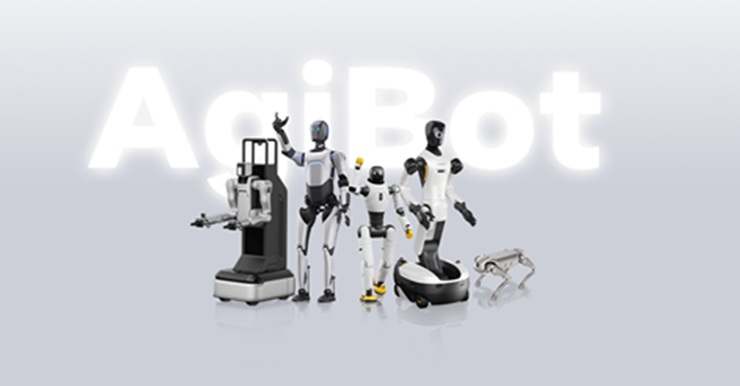
What happened: Multiple humanoid vendors were covered in “production” and “deployment” news, including (1) Humanoid Robotics Technology reporting that Agile Robots launched its first humanoid, “Agile ONE,” positioned for industrial settings and that it will be manufactured in-house in Germany; (2) a LinkedIn post from Humanoid Robotics Technology stating AGIBOT announced the roll-out of its 5,000th “mass-produced” humanoid; and (3) Humanoid Robotics Technology coverage of Shanghai Kepler Robotics’ Forerunner K2 debut.
Why it matters for humanoid robotics: The narrative is shifting from prototypes to scaling—but operators should treat “mass production” and “deployed” as marketing labels until unit counts, deployment scope, and reliability metrics are verified. If even a subset of these claims reflect real, sustained operations, procurement and integration timelines for humanoids in factories and warehouses could compress.
What’s in the sources (and what is not)
1) Agile Robots launches “Agile ONE” (industrial positioning)
Humanoid Robotics Technology reports that Agile Robots announced its first humanoid robot, Agile ONE, designed for industrial settings and to work alongside humans and other robotic solutions. The article also states it will be manufactured in-house in Germany and highlights claims about interaction, dexterous hands, and an AI model trained on real-world industrial data.
What we can safely take from that:
- There is a named product announcement (“Agile ONE”) and an intended market (industrial).
- The source asserts a manufacturing plan/location (in-house in Germany).
What is not provided (at least in the feed excerpt and category context available here):
- No confirmed ship dates, customer names, unit price, unit counts, or validated benchmarks (payload, speed, battery endurance, safety certification status, etc.).
Source: Humanoid Robotics Technology, “Agile Robots Launches Humanoid Robot, Agile ONE” (via Humanoid Production feed/category).
2) AGIBOT claims roll-out of its 5,000th “mass-produced” humanoid
A LinkedIn post from Humanoid Robotics Technology states that AGIBOT announced the roll-out of its 5,000th mass-produced humanoid robot and links to an external “full announcement” (the post uses a LinkedIn redirect to lnkd.in).
What we can safely take from that:
- A prominent industry account publicly repeated the 5,000th unit roll-out claim.
What remains unclear from the accessible snippet:
- Whether “roll-out” means manufactured, shipped, installed, or operational.
- Whether those 5,000 units are the same model, and whether they are in revenue-generating deployments.
- The extent of “mass production” (e.g., weekly/monthly run rate).
If you are making procurement decisions, treat “5,000th” as a lead to validate, not a sufficient proof of readiness.
Source: LinkedIn post, “AGIBOT Announces Deployment of 5,000th Humanoid Robot” by Humanoid Robotics Technology.
3) Shanghai Kepler Robotics debuts Forerunner K2
Humanoid Robotics Technology also covered Shanghai Kepler Robotics Co., Ltd. debuting the “Forerunner K2” humanoid robot.
What we can safely take from that:
- The K2 is being publicly positioned as a product and is notable enough to be covered in industry news.
What is not in the snippet shown here:
- Concrete deployment data (units, customers, runtime).
Source: Humanoid Robotics Technology, “Shanghai Kepler Robotics Co., Ltd. Debuts Forerunner K2 Humanoid Robot.”
4) “Mass production” as a category signal, not proof
The Humanoid Robotics Technology “Humanoid Production News” page aggregates multiple posts whose headlines include phrases like “begins mass production” and “announces mass production” (e.g., UBTECH Walker S2; Kepler K2 “Bumblebee”). This is useful as a market signal: multiple vendors are choosing production language.
But the page itself is an index; it does not, by itself, validate:
- Production throughput
- Yield/quality metrics
- Backlog and delivery schedules
- Operational KPIs
Source: Humanoid Robotics Technology Humanoid Production category page.
The numbers, explained in plain English (without hype)
“5,000th humanoid” — what that number might mean
A “5,000th unit” statement can map to several different realities:
- Manufacturing milestone: 5,000 units assembled (doesn’t guarantee field use).
- Shipment milestone: 5,000 units shipped to integrators or subsidiaries.
- Deployment milestone: 5,000 units installed at customer sites.
- Operational milestone: 5,000 units actively doing work for meaningful hours.
Only (4) strongly predicts operational maturity. The LinkedIn post does not provide the disambiguating details (fleet utilization, robot-hours, failure modes, or customer validation). So the practical takeaway is: the number is directionally meaningful as a scaling claim, but insufficient for readiness assessment on its own.
“Mass production” — what you should ask to translate it into risk
When a vendor (or an industry outlet) uses “mass production,” operators should request:
- Run rate: units/week or units/month for the specific model
- Quality: yield, rework rate, mean-time-between-failure (MTBF) if available
- Support: spare parts lead times, field service coverage
- Safety & compliance: the safety case for operation around people (and what constraints apply)
In other words, “mass production” should be converted into procurement-grade evidence.
Why this matters (operators, buyers, and investors)
For operations teams
If humanoid vendors are genuinely moving into repeatable manufacturing, the constraint shifts from “Can it do the task once?” to:
- Can it do the task for 2,000+ hours/year?
- Can it be maintained by your team?
- Can it be integrated into your safety and quality systems?
The sources here show more production-oriented messaging, but not enough operational KPIs to remove adoption risk.
For founders and integrators
Production and deployment claims raise the bar for differentiation. If competitors can credibly claim thousands of units, defensibility moves toward:
- Task packages (validated SOPs + tooling)
- Integration speed (WMS/MES, EHS)
- Reliability engineering and lifecycle cost
For investors
A cluster of “mass production” headlines is a sentiment indicator—but diligence should focus on:
- Revenue recognition vs. pilot fees
- Return rates and warranty cost exposure
- Supply chain constraints (actuators, harmonic drives, batteries)
Practical implications: what to verify before a pilot
Use this as a pilot-readiness checklist derived from the gaps in the public sources:
- Define “deployment.” Is the robot doing production work, or staged for demos?
- Request robot-hours. Ask for total fleet robot-hours and average robot-hours/unit/month.
- Ask for the failure catalogue. Top 10 fault classes, mean time to repair, and required tools.
- Clarify workcell boundaries. What is the safe operating envelope, speeds, and human proximity rules?
- Confirm spares and service. Parts list, pricing, lead times, and who performs field repair.
- Integration scope. What APIs exist (if any), and who owns PLC/MES integration?
Competitive/context view (only what’s verifiable here)
From the provided sources, we can only compare publicly stated signals, not performance:
- Some vendors are being described with “mass production” terminology in headlines and category pages at Humanoid Robotics Technology.
- AGIBOT is associated (via LinkedIn reposting) with a “5,000th mass-produced” milestone.
What we cannot verify from the provided material:
- Which vendor has the highest sustained throughput.
- Which platform has the best real-world uptime.
- Which deployments are paid, long-term contracts vs. limited trials.
This is important: “production” language is converging across the field; differentiation will be proven by operational data, not headline phrasing.
What we are not concluding (uncertainty and limits)
- We are not concluding that humanoids are broadly deployed at scale across factories based on these links alone.
- We are not concluding that a “5,000th unit” claim equals 5,000 robots doing useful work every day.
- We are not concluding that any specific robot is commercially available in your region without confirming sales channels, compliance, and support.
The sources are valuable as signals, but thin on the details required to draw strong operational conclusions.
What to watch next
If these vendors (and the broader market) are truly transitioning to scaled operations, look for upcoming public disclosures that include:
- Named customer sites (or at least industry segments) and what tasks are running
- Fleet metrics: uptime, robot-hours, intervention rate
- Production metrics: monthly output, backlog, delivery timelines
- Safety documentation: how risk is assessed and mitigated around people
Also watch for independent bodies weighing in on the “vision vs. reality” of humanoids in industry.
Where to go next (HumanoidHub)
- Explore the humanoid landscape by category and application: /explore
- Browse vendors and platforms: /brands
- Compare robots across specs and claims (where data exists): /compare
If you have a specific robot model in mind, the fastest path is to start at /brands and work toward model pages once you identify the manufacturer.
FAQ
Are humanoid robots “mass produced” today?
Some outlets and vendors use the term “mass production,” and Humanoid Robotics Technology aggregates multiple headlines using that language, but the public sources provided here do not consistently include run rates, yields, or shipment/operation definitions needed to confirm mass production in an industrial sense.
What does “deployed” mean when a vendor says a humanoid robot is deployed?
For humanoid robotics, “deployed” can mean installed at a site, running supervised trials, or operating as part of a production process. The AGIBOT “5,000th” claim shared on LinkedIn does not clarify whether deployment means manufactured, shipped, installed, or actively operating.
What should an operator ask for before piloting a humanoid robot?
An operator should ask a humanoid robot vendor for robot-hours, uptime, MTTR, a failure-mode list, safety constraints for human proximity, spare parts lead times, and integration responsibilities (PLC/MES/WMS), because headlines rarely include these procurement-critical details.
Is Agile ONE commercially available for factories?
Humanoid Robotics Technology reports that Agile Robots launched “Agile ONE” and positioned it for industrial use, with manufacturing planned in-house in Germany, but the provided source excerpts do not confirm commercial availability details such as ship dates, pricing, certifications, or customer deployments.
Why are production milestones important in humanoid robotics?
Production milestones matter because they can indicate progress toward repeatable manufacturing, field support maturity, and lower unit cost; however, without operational metrics (robot-hours, uptime) and clear definitions (manufactured vs. deployed), milestones alone do not prove readiness for high-duty industrial work.
Sources
- https://humanoidroboticstechnology.com/category/news/humanoid-production/feed
- https://humanoidroboticstechnology.com/category/news/humanoid-production
- https://humanoidroboticstechnology.com/news/shanghai-kepler-robotics-co-ltd-debuts-forerunner-k2-humanoid-robot
- https://www.linkedin.com/posts/humanoid-robotics-technology_agibot-announces-deployment-of-5000th-humanoid-activity-7404443841119805441-LcIm