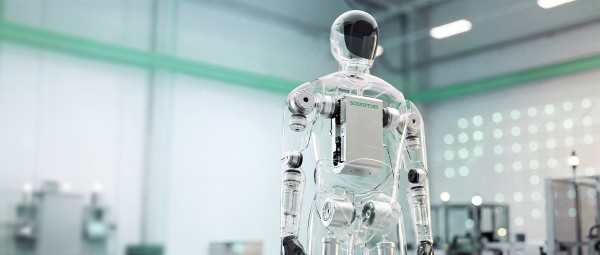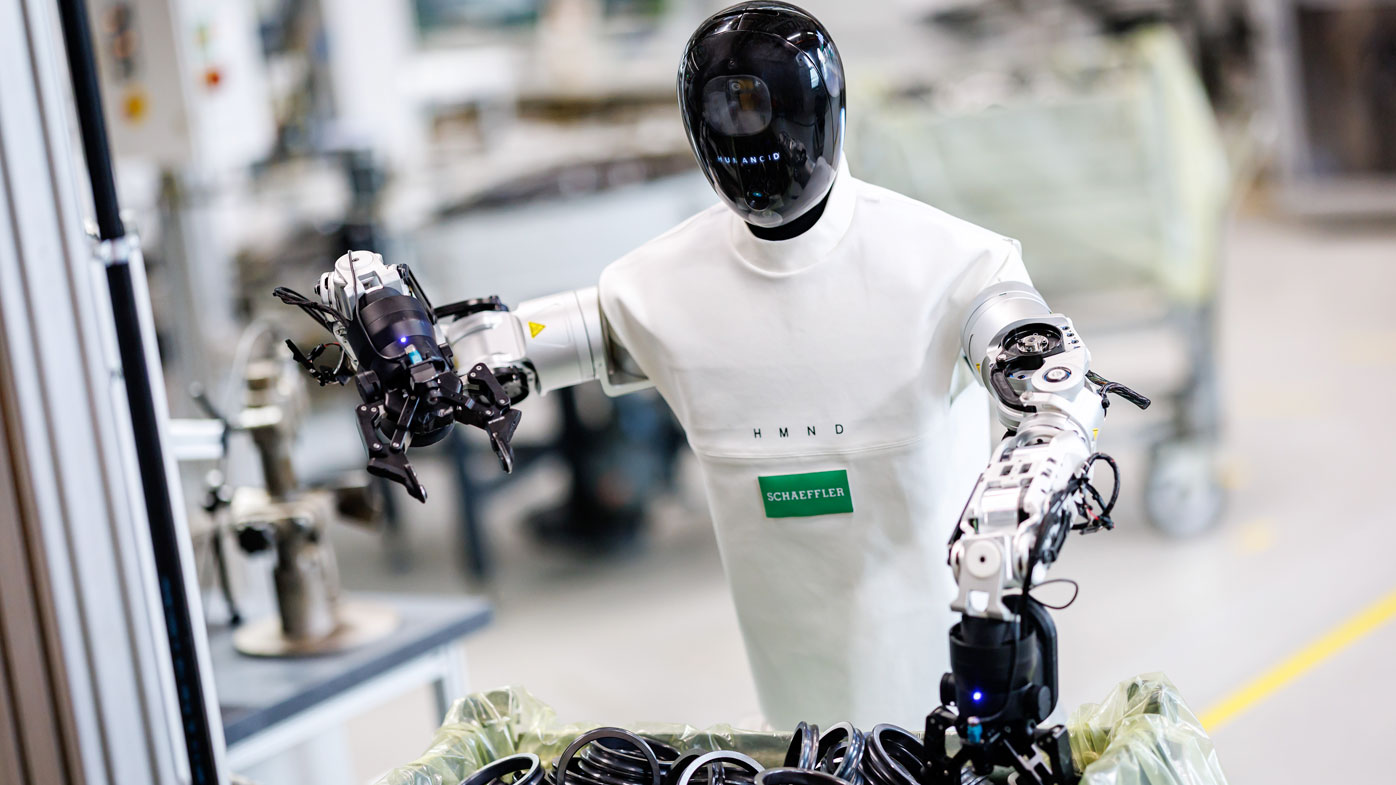
A cluster of 2026 announcements is tightening the gap between “humanoid demo” and “humanoid line item” in factory planning. Three signals stand out: AGIBOT says it has deployed its 5,000th mass-produced humanoid robot; BMW Group says it will pilot humanoid robots in production in Germany (Leipzig); and UK startup Humanoid says it signed a binding phased deployment and supply agreement with Schaeffler targeting a four-digit number of wheeled units by 2032, with first systems live in Germany before end of 2026.
These are not equivalent milestones—“deployed,” “pilot,” and “four-digit target” mean different things. But taken together, they illustrate how vendors and manufacturers are now framing humanoids around scale, supply chains, and plant integration rather than only lab capability.
Quick answer
What happened: In 2026, multiple parties publicly raised the bar on industrial humanoid adoption: AGIBOT reported a 5,000th “mass-produced” deployment, BMW announced its first production pilot of humanoid robots in Germany, and Humanoid and Schaeffler disclosed a binding phased agreement targeting thousands of wheeled humanoids over multiple years. (Sources: Humanoid Robotics Technology, BMW Group PressClub, Robotics 24/7, Humanoid (company), Siemens press release).
Why it matters for humanoid robotics: This is new, decision-useful language for operators and buyers—unit counts, binding supply terms, and named plants—but critical operational metrics are still largely missing (hours between failures, safety validation details, staffing model, and true cost per task). The announcements are credible “intent and direction” signals, not proof that humanoids have already hit broad, profitable autonomy on factory floors.
What was announced (and what it does not prove)
1) AGIBOT: “Deployment of its 5,000th mass-produced humanoid robot”
AGIBOT says it rolled out its 5,000th mass-produced humanoid robot and frames the milestone around improved stability, reliability, and durability. The post also indicates a product portfolio with at least one full-size A-Series and provides a count for that line: 1,742 A-Series units have “achieved mass production,” per the same article. (Source: Humanoid Robotics Technology)
What remains unclear:
- What “deployed” means here (shipped vs. installed vs. operating in customer workflows).
- How many of the 5,000 are in paying customer environments versus internal/testing fleets.
- Runtime metrics (uptime, duty cycle), and what tasks those robots are doing.
2) BMW Group: first Germany pilot in production, plus a “Center of Competence”
BMW Group says it will launch a pilot project with humanoid robots at Plant Leipzig—its first deployment in production in Germany—and that a first pilot deployment was successfully completed at Plant Spartanburg (USA). BMW also announces a new “Center of Competence for Physical AI in Production” to accelerate integration of AI and robotics. (Source: BMW Group PressClub)
What remains unclear:
- Which humanoid vendor(s) BMW is using in Leipzig (the press release frames the initiative but does not, in the excerpt provided, specify the robot brand).
- Scope of the pilot: unit count, stations, shift coverage, and whether operation is supervised, teleop-assisted, or autonomous.
3) Humanoid + Schaeffler: binding phased deployment targeting “four-digit” wheeled units
Robotics 24/7 reports that Humanoid signed a binding phased deployment and supply agreement with Schaeffler, with deployment beginning in live German production environments in late 2026. (Source: Robotics 24/7)
Humanoid’s own newsroom post adds that the agreement targets a four-digit number of wheeled units across Schaeffler’s global facilities by 2032, that the first systems go live in Germany before the end of 2026, and that Schaeffler becomes a preferred actuator supplier for Humanoid. (Source: thehumanoid.ai)
Siemens separately published a press release about Siemens and Humanoid bringing “Physical AI” to the factory floor. (Source: Siemens)
What remains unclear:
- Exact unit numbers per year and acceptance criteria for phase gates.
- Total contract value, pricing model (purchase vs. RaaS), and who carries integration risk.
- Operational envelope: payload, reach, cycle time targets, and safety approach.
The numbers, in plain English (without hype)
Humanoid-robot headlines often compress very different realities into a single “scale” narrative. Here’s how to interpret the public numbers.
-
“5,000th mass-produced” (AGIBOT) is a manufacturing and distribution signal. It suggests a company claims it can build robots repeatedly—not that all 5,000 are doing value-generating work. The same source lists 1,742 units for the A-Series specifically, implying multiple models contribute to the 5,000 total. (Source: Humanoid Robotics Technology)
-
“Pilot project in production” (BMW) is a plant-integration signal. It says an OEM is willing to run humanoids in a real production context (even if tightly scoped), which is often harder than building a demo because it requires safety reviews, station design, change management, and maintenance planning. (Source: BMW Group PressClub)
-
“Four-digit by 2032; live in 2026” (Humanoid + Schaeffler) is a commercial commitment with a long ramp. “Four-digit” means at least 1,000 units, but spread over multiple years and conditioned by phased deployment. It’s more concrete than an MoU, but still not proof of achieved operational performance today. (Sources: Robotics 24/7, thehumanoid.ai)
Context: why these signals are showing up now
Three forces are converging in these sources:
-
Factories are treating humanoids as an integration program, not a gadget. BMW’s “Center of Competence” framing implies a durable internal capability—process engineering plus AI/robotics integration—rather than one-off experimentation. (Source: BMW Group PressClub)
-
Supply chain and components (especially actuators) are becoming strategic. Humanoid explicitly links Schaeffler to actuator supply, and Robotics 24/7 calls out a binding supply agreement, which is closer to how established automation scales than how robotics pilots are typically announced. (Sources: Robotics 24/7, thehumanoid.ai)
-
The ecosystem narrative is shifting toward “physical AI.” BMW and Siemens both use the term. Whether or not you like the label, it typically signals an emphasis on perception + planning + control integrated with real machines, plus the supporting data flywheel (logs, simulation, retraining, and validation). (Sources: BMW Group PressClub, Siemens)
Why it matters (operator, buyer, and investor lens)
For operators and plant leaders
- These announcements are procurement precursors. “Binding phased deployment” and “pilot in production” are steps that typically precede requirements documents, line trials, safety validation, and eventually standard work.
- Expect integration work to dominate early value. Even if the robot is capable, your bottlenecks are usually tooling, station design, EHS approvals, spares, and training.
For robotics vendors
- Scale claims will be judged by serviceability. A 1,000+ unit aspiration stresses spare parts, field service, remote diagnostics, and change-control discipline.
- Component partnerships (actuators) may become differentiators as performance and reliability converge on “good enough.” (Sources: Robotics 24/7, thehumanoid.ai)
For investors and strategics
- Look for evidence beyond unit counts: duty-cycle KPIs, margin model (hardware vs. service), and proof that deployments reduce labor constraints or improve throughput/quality.
- Public plant names matter. BMW naming Leipzig (and referencing Spartanburg) is more concrete than “in discussion with OEMs,” even if the pilot scope remains undisclosed. (Source: BMW Group PressClub)
Competitive / market context (what is verifiable vs. not)
A LinkedIn post argues that Chinese vendors may prioritize cost and manufacturing scale, with some models “reportedly” priced far below $100k. This is useful as a market narrative, but it is not a primary source for pricing and does not provide verifiable price sheets in the excerpt. Treat it as commentary, not confirmed pricing intelligence. (Source: LinkedIn post)
Separately, third-party market posts (e.g., a “Humanoid Robot Industry Report 2026”) claim counts of tracked robots and price ranges, but the excerpt itself notes that only some prices are verified from official sources. Use such reports as a starting point for leads, then validate with OEM quotes or vendor documentation. (Source: RoboZaps report)
Bottom line: the most verifiable competitive signals in this bundle are not price—they are named factories, phased contracts, and claimed production milestones.
Practical implications: how to translate these announcements into action
If you’re evaluating humanoids for industrial operations, use the announcements as prompts to request specific diligence items:
- Define “deployment” in your contract language. Is it shipment, installation, acceptance test, or sustained performance?
- Demand “station readiness” artifacts. EHS risk assessment approach, safety functions, and operator training plan.
- Ask for reliability in operational terms. Mean time between intervention, mean time to repair, spare parts strategy, and remote support.
- Clarify autonomy boundaries. When does a human intervene, and how is that logged and improved?
- Plan integration ownership. Who supplies end effectors, fixtures, and MES/SCADA connectivity (if any)?
What we are not concluding
- We are not concluding that “humanoids are ready for general factory work” across sites. The sources do not provide standardized performance metrics, safety case details, or independent verification.
- We are not concluding that any particular vendor has achieved profitable, broad deployment. “Four-digit by 2032” is an ambition and a commercial agreement framework; it is not the same as thousands already running.
- We are not concluding that price compression is proven across the market. The strongest pricing claims here are not backed by primary price disclosures.
What to watch next (signals that move this from headline to adoption)
- Pilot readouts with measurable KPIs (hours run, interventions/shift, task success rate, downtime causes).
- Clear unit economics (purchase/RaaS terms, service costs, expected station ROI).
- Safety and compliance transparency (how risk assessments are done; how change control is handled).
- Evidence of repeatable deployment playbooks (how fast the second and third sites go live).
- Supplier ecosystem maturity (actuators, hands, batteries, compute) and whether vendors can keep BOM stable over multi-year contracts.
Where to go next
- Explore humanoid robots and vendors: /explore
- Browse companies/brands involved in humanoids: /brands
- Compare platforms and deployment claims side-by-side: /compare
FAQ
What did AGIBOT announce about humanoid robot production?
AGIBOT announced the rollout/deployment of its 5,000th mass-produced humanoid robot and stated that its full-size AGIBOT A-Series has reached mass production with 1,742 units, according to Humanoid Robotics Technology’s report.
What did BMW Group say about humanoid robots in Germany?
BMW Group said it will deploy humanoid robots in a pilot project at Plant Leipzig, marking the first time it is bringing humanoid robots into production in Germany, and it also referenced a completed pilot at Plant Spartanburg (USA).
What is the Humanoid–Schaeffler agreement actually committing to?
Humanoid and Schaeffler disclosed a binding phased deployment and supply agreement with deployments starting in live German production environments in late 2026, and Humanoid stated the plan targets a four-digit number of wheeled units by 2032, subject to phased rollout.
Does “thousands of humanoids” mean thousands are working in factories today?
No. In these sources, “thousands” most directly refers to targets and phased agreements extending to 2032, not a confirmed present-day installed base with published runtime and uptime metrics.
What’s the key diligence question for factory buyers reading these announcements?
The key diligence question is: what are the acceptance criteria and operational KPIs (uptime, intervention rate, safety constraints, and cost per task) that turn a “pilot” or “phased deployment” into sustained production use.
Sources
- https://humanoidroboticstechnology.com/industry-news/agibot-announces-the-deployment-of-its-5000th-mass-produced-humanoid-robot/
- https://www.press.bmwgroup.com/global/article/detail/T0455864EN/bmw-group-to-deploy-humanoid-robots-in-production-in-germany-for-the-first-time?language=en
- https://www.robotics247.com/article/humanoid-to-deploy-thousands-of-its-humanoid-robots-on-schaeffler-factory-floors
- https://thehumanoid.ai/humanoid-secures-landmark-deal-with-schaeffler-to-deploy-thousands-of-humanoid-robots/
- https://press.siemens.com/global/en/pressrelease/siemens-and-humanoid-bring-physical-ai-factory-floor-deploying-humanoids-industrial
- https://www.linkedin.com/posts/scott-owen-6769776_humanoid-robots-are-no-longer-a-laboratory-activity-7435786656877731840-Qa_Z
- https://blog.robozaps.com/b/humanoid-robot-industry-report-2026