Humanoid robotics is moving from lab demos toward pilots and early deployments—but public announcements still leave big operational questions unanswered. In 2026, three signals stand out: AGIBOT’s claim of deploying its 5,000th “mass-produced” humanoid, BMW’s plan to pilot humanoids in series production in Germany, and consumer/home claims that are still largely press-release driven.
This brief focuses on what’s actually stated in sources, what it means for operators and buyers, and what to ask vendors before treating any milestone as proof of readiness.
Quick answer
What happened: Multiple public updates in 2026 point to increased humanoid robot activity: AGIBOT says it rolled out its 5,000th mass-produced humanoid and provides unit counts for specific product lines; BMW says it will deploy humanoid robots in production in Germany for the first time via a pilot at Plant Leipzig; and UniX AI issued a release claiming “real-home” household validation for its humanoid robot Panther.
Why it matters for humanoid robotics: These announcements indicate a shift toward volume manufacturing claims and factory pilots, which is where reliability, safety, maintainability, and integration costs become the real bottlenecks. At the same time, the disclosures are incomplete: unit definitions, deployment conditions, operating hours, uptime, and safety cases are mostly not provided—so operators should treat the headlines as leads to investigate, not proof of industrial maturity.
What the sources actually say (and what they don’t)
1) AGIBOT: “5,000th mass-produced humanoid robot”
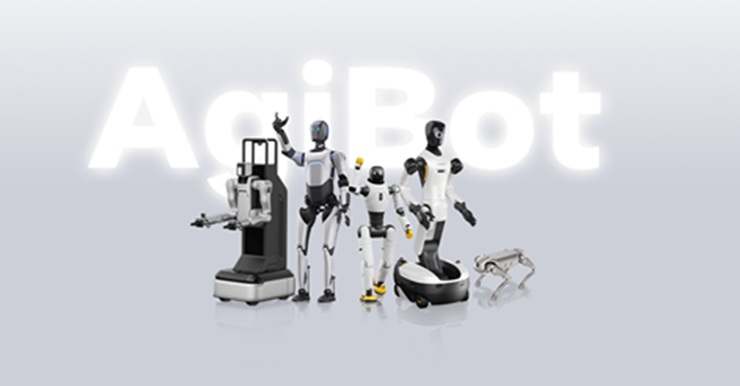
Humanoid Robotics Technology reports that AGIBOT announced the roll-out of its 5,000th mass-produced humanoid robot at its factory, positioning it as progress on stability, reliability, and durability, and emphasizing industry partner needs. The same article states that AGIBOT’s A-Series has achieved mass production with 1,742 units and implies multiple product lines contributing to the broader 5,000 milestone. Source: Humanoid Robotics Technology on AGIBOT’s 5,000th unit.
What’s unclear from the public write-up:
- Whether “deployed” means shipped, installed at customers, or produced/rolled off a line.
- The split between internal use, partner pilots, and revenue deployments.
- Field performance metrics: MTBF/MTTR, uptime, safety incidents, autonomous vs teleop time.
- Where (which sites/industries) those units operate and under what constraints.
2) BMW Group: first Germany production deployment pilot
BMW Group’s press release (dated Feb 27, 2026) states it will launch a pilot project with humanoid robots at BMW Plant Leipzig, and that a first pilot deployment was successfully completed at Plant Spartanburg (USA). BMW frames this as part of “Physical AI” in production and mentions exploring further applications including batteries and components. Source: BMW Group press release.
What’s unclear from the press release alone:
- Which humanoid robot vendor/model is used (not specified in the excerpted material).
- The tasks: material handling, machine tending, kitting, inspection, etc.
- The safety case: speed/force limits, zone design, E-stops, operator training.
- KPIs BMW will use to decide expansion (cycle time, quality, ergonomics, staffing).
3) UniX AI: “first real-home deployment” claim
Markets Insider republishes a GlobeNewswire press release in which UniX AI claims its third-generation humanoid robot Panther completed continuous multi-task validation in “real, unmodified household environments,” performing domestic tasks such as making beds, preparing breakfast, cleaning, and organizing. Source: Markets Insider / GlobeNewswire release.
What’s unclear (and why that matters):
- The number of homes, duration, and whether humans intervened.
- The definition of “mass-producible” and any evidence of production scale.
- Safety measures for operation around residents (especially children/pets).
- Whether performance generalizes beyond selected households.
Context: why these signals cluster now
A recurring theme across industry commentary is that 2025–2026 marks a transition from “demo era” to pilots, preorders, and more frequent product announcements. For example, Humanoid’s recap frames 2025 as a turning point toward more real-world testing and pilot programs. Source: thehumanoid.ai – 2025: The Year of the Humanoid.
Separately, market-style compilations such as RoboZaps’ “Humanoid Robot Industry Report 2026” claim to track dozens of robots and list ranges of prices and availability statuses, but also note that only some pricing is verified from official sources. Source: RoboZaps report.
Operator takeaway: the volume of announcements is increasing, but verification standards vary dramatically by source type:
- OEM press releases (e.g., BMW) are credible about intent and pilot scope, but often omit vendor and performance metrics.
- Third-party recap sites can be useful indices, but may mix confirmed and estimated figures.
- Wire-service press releases can be directionally interesting, but require the most validation.
The numbers, in plain English (without hype)
“5,000 deployed” vs “5,000 produced”
AGIBOT’s milestone is framed as a rollout/deployment of a 5,000th “mass-produced” unit. Even if the number is accurate, it doesn’t automatically mean 5,000 robots are working full-time in customer facilities. In robotics, “deployment” can mean anything from shipment to a partner lab to a revenue-generating installation with service-level commitments.
What to ask AGIBOT (or any vendor) to interpret the number:
- Of the 5,000, how many are installed at customer sites today?
- How many are in paid production contracts vs pilots?
- Typical weekly operating hours per robot in the field.
- Fleet uptime (median and P95), and top 3 failure modes.
“Pilot in series production” is not a plant-wide rollout
BMW’s announcement is explicitly a pilot project in an existing production environment. That’s significant—factories are unforgiving integration settings—but pilots can still be small: a handful of units, limited tasks, carefully constrained areas.
What to ask BMW’s implementation partners (or your own integrator):
- Which station(s) the humanoids operate in, and what upstream/downstream constraints exist.
- How the robot is trained/updated and how changes are validated.
- What success metrics trigger expansion.
Why it matters (practical implications)
For factory operators and system integrators
- Humanoids are being evaluated inside real production systems, which forces clarity on safety certification strategy, maintenance workflow, spare parts, and escalation paths.
- Expect integration work to look less like “install a robot” and more like install + process engineering + IT/security + training.
- The vendors that win will likely be those who can provide repeatable task packages (fixtures, perception stack, recovery behaviors, tooling) rather than just impressive locomotion.
For buyers and distributors
- Announced milestones can help prioritize vendor due diligence, but do not replace site visits and reference calls.
- Ask for evidence of: operating hours, customer references (even anonymized), service model, and documented safety practices.
For investors
- The key differentiator is shifting from “capability demo” to “costed reliability”: service gross margin, failure modes, and the ability to manufacture and support fleets.
Competitive / ecosystem context (careful comparison)
Public signals suggest three different “tracks” are developing:
- Industrial pilots by major manufacturers (e.g., BMW) with conservative rollout and high safety/integration rigor. Source: BMW press release.
- High-volume manufacturing claims by humanoid OEMs (e.g., AGIBOT) that emphasize production scale. Source: AGIBOT milestone coverage.
- Home/consumer commercialization narratives that may be earlier in verification terms, often communicated via press releases. Source: UniX AI claim.
What we cannot verify from the provided sources: a normalized comparison of autonomy level, cost per hour, safety certification status, or head-to-head task benchmarks across these companies.
What we are not concluding (uncertainty and overreads)
- We are not concluding that “mass-produced” means economically scalable, profitable, or broadly deployed at customer sites.
- We are not concluding BMW’s pilot implies imminent plant-wide humanoid adoption; pilots can run for months with limited scope.
- We are not concluding UniX AI’s home validation represents generalized, safe household operation at consumer scale; the claim needs independent detail on duration, supervision, and safety.
What to watch next (verification checkpoints)
- Deployment definitions: shipped vs installed vs operating hours in production.
- Safety and compliance: how vendors handle risk assessment, functional safety, and human proximity.
- Service model: spare parts lead times, on-site support, remote monitoring, and training.
- Task repeatability: whether pilots turn into repeatable packages deployable across multiple sites.
- Cybersecurity posture: connected humanoids expand the attack surface; treat them like operational technology endpoints. (General risk context discussed in Recorded Future’s analysis.) Source: Recorded Future report.
Where to go next (HumanoidHub navigation)
- Explore the current landscape of humanoids and vendors: /explore
- Browse manufacturers and platforms: /brands
- Compare robots on operator-relevant criteria: /compare
FAQ
Did AGIBOT really deploy 5,000 humanoid robots?
AGIBOT is reported to have announced the roll-out/deployment of its 5,000th mass-produced humanoid robot, and the same report cites 1,742 units for its A-Series. The public source does not fully define “deployed,” so it is unclear how many units are installed and operating at customer sites versus produced or allocated for pilots. Source: https://humanoidroboticstechnology.com/industry-news/agibot-announces-the-deployment-of-its-5000th-mass-produced-humanoid-robot/
What exactly is BMW doing with humanoid robots in Germany?
BMW Group says it will launch a pilot project using humanoid robots at Plant Leipzig, marking the first deployment of humanoids in production in Germany for BMW. The press release frames this under “Physical AI” and notes a prior pilot was completed at Plant Spartanburg in the U.S., but it does not specify the robot model or detailed tasks in the excerpted information. Source: https://www.press.bmwgroup.com/global/article/detail/T0455864EN/bmw-group-to-deploy-humanoid-robots-in-production-in-germany-for-the-first-time?language=en
Is there proof of a mass-produced humanoid robot working in real homes?
UniX AI claims its humanoid robot Panther completed continuous multi-task validation in “real, unmodified household environments,” according to a GlobeNewswire press release republished by Markets Insider. The release is not accompanied (in the provided material) by independent verification details such as number of homes, test duration, or intervention rates, so buyers should treat it as a claim that requires follow-up. Source: https://markets.businessinsider.com/news/stocks/unix-ai-claims-first-real-home-deployment-of-mass-produced-humanoid-robot-panther-1036012996
What should an operator ask when a vendor claims “mass production”?
When a humanoid vendor claims “mass production,” an operator should ask for definitions and field metrics: how many robots are installed at customer sites, how many are paid vs pilot units, typical operating hours per week, fleet uptime distribution, top failure modes, and service response times. These details are not consistently provided in public milestone announcements.
Why do factory pilots matter more than staged demos for humanoid robots?
Factory pilots matter because factories impose real constraints—cycle times, safety rules, contamination/ESD considerations, maintenance windows, and integration with MES/IT systems—so a pilot reveals whether a humanoid robot can be operated and supported reliably. BMW’s Leipzig pilot is an example of this kind of real production environment test. Source: https://www.press.bmwgroup.com/global/article/detail/T0455864EN/bmw-group-to-deploy-humanoid-robots-in-production-in-germany-for-the-first-time?language=en
Sources
- https://humanoidroboticstechnology.com/industry-news/agibot-announces-the-deployment-of-its-5000th-mass-produced-humanoid-robot/
- https://www.press.bmwgroup.com/global/article/detail/T0455864EN/bmw-group-to-deploy-humanoid-robots-in-production-in-germany-for-the-first-time?language=en
- https://markets.businessinsider.com/news/stocks/unix-ai-claims-first-real-home-deployment-of-mass-produced-humanoid-robot-panther-1036012996
- https://thehumanoid.ai/2025-the-year-of-the-humanoid/
- https://blog.robozaps.com/b/humanoid-robot-industry-report-2026
- https://www.recordedfuture.com/research/future-humanoid-robotics