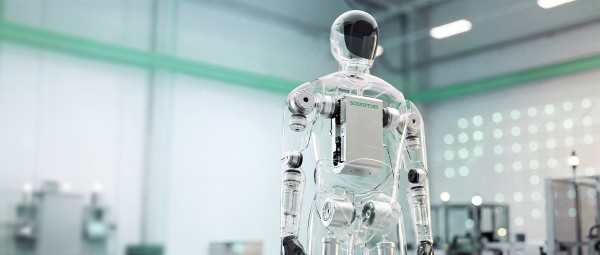
A notable 2026 signal in humanoid robotics is no longer just better demos—it’s companies and industrial buyers talking about deployment counts and production use, even if details remain sparse.
One headline example: a LinkedIn post from Humanoid Robotics Technology states that AGIBOT announced the roll‑out of its “5,000th mass-produced humanoid robot.” That claim, alongside OEM communications like BMW Group’s announcement that it will deploy humanoid robots in production in Germany, and a 2026 industry study describing a market moving toward commercial deployments, adds up to a clear directional change: stakeholders are testing whether humanoids can be operated as a repeatable product category, not a one-off prototype.
Quick answer
Humanoid robotics is showing early signs of moving from pilot projects to platform rollouts: public statements now reference multi-thousand unit milestones (AGIBOT’s “5,000th” roll-out claim) and factory deployments (BMW Group’s first production deployment in Germany). For operators and buyers, the business impact is that evaluation criteria are shifting from “can it do the task once?” to “can we deploy, maintain, and scale it safely with predictable uptime, training, and support?” The key caveat: “deployment” and “mass-produced” are not standardized terms, and most announcements still omit the operational metrics that determine real ROI.
What happened (and what we can verify)
1) AGIBOT: a “5,000th” humanoid roll-out claim
A LinkedIn post by Humanoid Robotics Technology reports that AGIBOT “announced the roll‑out of its 5,000th mass-produced humanoid robot.” The post links to an external “full announcement,” but that destination is not included in the provided sources, so we cannot verify:
- what AGIBOT counts as a “humanoid” unit (full-size biped vs. other form factors)
- whether “roll‑out/deployed” means shipped, installed, accepted by a customer, or operating
- where the robots are deployed (industry verticals, sites, countries)
- what “mass-produced” means in their definition (batch size, manufacturing line maturity)
Source: LinkedIn post.
2) BMW Group: humanoids entering production environments (first time in Germany)
BMW Group has published an official press release stating it will deploy humanoid robots in production in Germany for the first time. BMW’s release is a high-signal data point because it reflects an industrial buyer’s public positioning (and typically internal due diligence on safety, integration, and brand risk). However, press releases often do not include the granular data operators need (unit count, cycle time, line allocation, uptime). Those specifics should be treated as unknown unless explicitly stated.
Source: BMW Group press release.
3) 2026 Humanoid Robot Study: “beyond experimental” framing
A publicly accessible PDF titled “2026 Humanoid Robot Study” (consult‑ing.ag / Nexery) characterizes the sector as moving from experimental development toward commercial and industrial deployment scenarios, driven by advances in AI, simulation, sensors, actuators, and robotics software.
This is not a single-company disclosure; it’s a market narrative. Treat it as context, not as evidence of specific unit counts.
Source: 2026 Humanoid Robot Study (PDF).
Context: why “deployment counts” are suddenly everywhere
Humanoid robots (broadly defined as robots with a body plan resembling a human, often with a torso/arms and sometimes bipedal locomotion) have long been showcased in labs and staged demos. But counting deployments implies a different operating model: manufacturing, supply chains, field support, and fleet management.
Definitions vary, but the baseline concept of “humanoid robot” is commonly described as a robot with a human-like form factor, capable of interacting with human environments using limbs/sensors/actuators. Source for general definition and background taxonomy: Wikipedia: Humanoid robot.
Meanwhile, market research publishers are actively packaging the trend as a transition toward task-specific deployments and convergence with “embodied AI.” Because most market reports are paywalled summaries, they provide directional themes but limited verifiable numbers in the public excerpts.
Sources for market framing (public pages):
Why it matters (operator + buyer view)
1) The buying conversation is shifting to operations
When companies claim multi-thousand “deployments,” buyers will start asking operational questions that matter more than demo videos:
- Service model: Who maintains the robot on-site? What is the spare parts strategy?
- Uptime and recovery: What happens after a fall, a collision, or a perception failure?
- Training pipeline: How are new tasks authored, tested, validated, and rolled back?
- Safety case: How is risk assessed in mixed human-robot spaces?
BMW’s public intent to put humanoids into production environments reinforces that the evaluation surface area includes safety, integration, and governance—not only manipulation and locomotion.
2) “Deployment” becomes a competitive metric—if it’s defined
AGIBOT’s “5,000th” roll-out claim (as reported on LinkedIn) matters because it sets an expectation that some vendors are reaching higher volumes. But without standardized reporting, it can also confuse the market:
- A robot shipped is not the same as a robot installed.
- An installed robot is not the same as a robot doing useful work for thousands of hours.
- A “humanoid” may mean different payload, speed, and autonomy capabilities.
For investors and distributors, the practical takeaway is to demand a consistent funnel: built → shipped → accepted → operating → productive.
The numbers, explained plainly (without hype)
What “5,000th deployed / mass-produced” might mean
Based strictly on the LinkedIn post, the only concrete number is 5,000 and the phrase “mass-produced humanoid robot.” Without the underlying announcement, we cannot tell whether 5,000 refers to:
- cumulative production to date
- cumulative shipments
- cumulative deployments across pilot sites
- a mix of configurations, revisions, or related models
So treat the number as a claimed milestone rather than a verified installed base. It’s still meaningful as a public signal: someone believes the market will reward “scale” messaging.
What BMW’s “deploy in production” does—and does not—guarantee
BMW’s statement indicates intent and organizational sponsorship. It does not automatically imply:
- broad rollout across multiple plants
- replacement of existing automation
- immediate labor ROI
It is best interpreted as: BMW is willing to trial or introduce humanoids within real production constraints (safety, cadence, quality systems), which is harder than a trade-show demo.
Practical implications (what to do if you operate a site)
If you’re evaluating humanoids for logistics, kitting, machine tending, or intra-facility handling, use these announcements to tighten your diligence:
-
Ask for the deployment definition in writing. “Deployed” should be measurable (site acceptance test passed, operating hours logged, tasks performed).
-
Require task KPIs, not just capabilities. Example operator KPIs:
- picks/hour or kits/hour
- mean time to recover after failure (MTTR)
- human interventions per shift
-
Plan for a constrained first use case. Early deployments tend to succeed where:
- the environment is partially structured
- objects are standardized
- safety zones and procedures are clear
-
Audit integration needs. You will likely need interfaces to WMS/MES, work instructions, and incident logging.
Competitive/context check (what we can compare—and what we can’t)
What we can compare from the provided sources:
- Buyer signaling: BMW’s press release is a buyer-side signal of seriousness about production environments.
- Vendor signaling: AGIBOT’s “5,000th” claim (as reported) is a vendor-side scale signal.
- Ecosystem breadth: The 2026 study frames a growing field of entrants and use cases.
What we cannot verify from these sources:
- which vendor has the largest productive installed base
- comparative performance benchmarks (payload, speed, autonomy)
- total cost of ownership across vendors
- safety incident rates and real-world uptime
Treat “race” narratives cautiously unless vendors publish comparable metrics.
What we are not concluding (uncertainty section)
- We are not concluding that 5,000 AGIBOT humanoids are operating productively in customer facilities; the linked post does not provide operational proof.
- We are not concluding that BMW’s deployment equals full-scale adoption across its production network; the release indicates first-time deployment in Germany, not an enterprise-wide rollout.
- We are not concluding that the market has standardized definitions for “deployment,” “mass-produced,” or “general-purpose.” It has not.
What to watch next
-
Operational metrics disclosed publicly: look for hours operated, intervention rates, safety case summaries, and audited uptime.
-
Procurement patterns: are buyers contracting for robots as capex purchases, leasing, or “robot-as-a-service”? (Not specified in the provided sources.)
-
Standard task packages: vendors will likely package repeatable tasks (palletizing, tote handling, kitting) with constrained environments.
-
Regulatory and safety documentation: especially for mixed human-robot collaboration in production lines.
Where to go next (HumanoidHub)
- Explore the broader landscape: /explore
- Browse manufacturers and integrators: /brands
- Compare robots and specs (where listed): /compare
- If you’re sourcing for industrial tasks, start from solution mapping: /solutions/{slug} (choose the closest match once you’ve identified your target task, e.g., logistics handling or manufacturing support)
FAQ
What did AGIBOT announce about humanoid robot deployments?
AGIBOT was reported (via a LinkedIn post from Humanoid Robotics Technology) to have announced the roll-out of its 5,000th “mass-produced humanoid robot.” The post does not provide verifiable details on where robots are deployed or what “deployed” means operationally. Source: https://www.linkedin.com/posts/humanoid-robotics-technology_agibot-announces-deployment-of-5000th-humanoid-activity-7404443841119805441-LcIm
Why does BMW Group deploying humanoid robots in Germany matter?
BMW Group’s press release about deploying humanoid robots in production in Germany matters because it is a buyer-side signal: a major manufacturer is willing to introduce humanoids into real production constraints (safety, quality systems, cadence). The release does not necessarily imply large-scale adoption or disclosed unit counts. Source: https://www.press.bmwgroup.com/global/article/detail/T0455864EN/bmw-group-to-deploy-humanoid-robots-in-production-in-germany-for-the-first-time?language=en
Does “5,000 humanoids deployed” mean 5,000 robots are working in factories today?
Not necessarily. “Deployed” can mean shipped, installed, accepted by a customer, or operating productively, and the provided source does not define the term. Without operational metrics (operating hours, task throughput, uptime), the figure should be treated as a claimed milestone rather than confirmed productive fleet size.
What is the most practical first use case for humanoid robots in industry?
The most practical first use case for humanoid robots in industry is usually a constrained, repeatable task in a partially structured environment—such as kitting, tote handling, or simple material movement—because it reduces perception and safety complexity. The specific best use case depends on your site layout, object variability, and safety requirements.
What should buyers ask vendors to prove real deployment maturity?
Buyers should ask humanoid robot vendors for a written definition of “deployment,” site acceptance criteria, operating-hours evidence, human-intervention rates, mean time to recover (MTTR), safety documentation, and a support/spares plan. These operator metrics matter more than isolated capability demos when scaling beyond pilots.
Sources
- https://www.linkedin.com/posts/humanoid-robotics-technology_agibot-announces-deployment-of-5000th-humanoid-activity-7404443841119805441-LcIm
- https://www.press.bmwgroup.com/global/article/detail/T0455864EN/bmw-group-to-deploy-humanoid-robots-in-production-in-germany-for-the-first-time?language=en
- https://consult-ing.ag/uploads/pdfs/2026_ING.-Humanoid-Robot-Study.pdf
- https://en.wikipedia.org/wiki/Humanoid_robot
- https://bisresearch.com/industry-report/humanoid-robot-market.html
- https://www.idtechex.com/en/research-report/humanoid-robots/1093
- https://humanoidroboticstechnology.com/news/shanghai-kepler-robotics-co-ltd-debuts-forerunner-k2-humanoid-robot