A cluster of 2026 announcements suggests humanoid robotics is shifting from “cool demo” territory toward measurable deployments and manufacturing scale—at least for a few companies and use cases.
The most concrete signals in the sources are: (1) BMW Group’s announcement of a first humanoid pilot in production in Germany after a prior pilot in the U.S. (BMW press release); (2) AgiBot/AGIBOT-related claims about thousands of “mass-produced” units (Humanoid Robotics Technology) plus an interview-style Forbes piece citing shipment/share figures (Forbes); and (3) a startup (Humanoid) claiming a binding phased agreement with Schaeffler targeting a four-digit rollout by 2032, with first live systems in Germany before end of 2026 (thehumanoid.ai).
Quick answer
Humanoid robotics in 2026 is showing early “production signals” rather than just prototypes: BMW says it will pilot humanoid robots in a German car plant, AgiBot/AGIBOT claims a 5,000th mass-produced robot milestone, and Humanoid claims a phased, binding deployment agreement with Schaeffler targeting thousands of units over several years.
Why it matters: operators and buyers should treat these as a shift toward real procurement and integration work (safety cases, uptime, maintenance, line balancing, and training), but not as proof that general-purpose humanoids are ready for broad rollout. The numbers reported so far rarely include the details that determine operational success—task scope, cycle times, autonomy level, MTBF/uptime, and cost per productive hour.
What was announced (and by whom)
BMW: first humanoid deployment in production in Germany (pilot)
BMW Group says it is launching a pilot project with humanoid robots at Plant Leipzig—its first such deployment in production in Germany—and that a first pilot deployment was already successfully completed at Plant Spartanburg in the U.S. BMW also announced a “Center of Competence for Physical AI in Production” to accelerate integration of AI and robotics in production. Source: BMW Group press release dated Feb 27, 2026. (BMW)
What’s missing for operators: BMW’s release (as summarized in the accessible excerpt) does not specify the robot vendor(s), unit count, exact tasks, autonomy level, performance metrics, or safety certification approach.
AGIBOT/AgiBot: “5,000th mass-produced humanoid robot” milestone
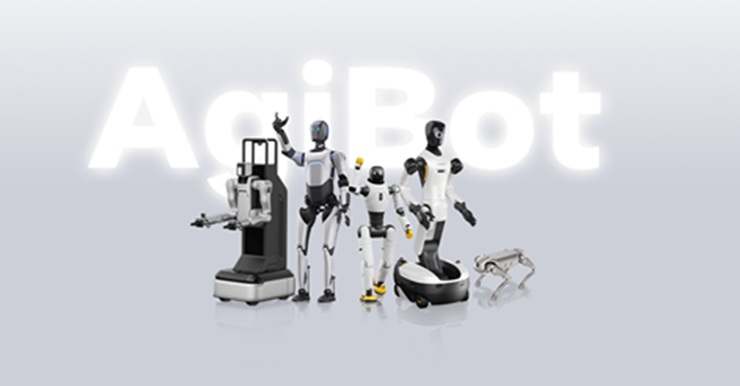
Humanoid Robotics Technology reports that AGIBOT announced the roll-out of its 5,000th mass-produced humanoid robot at its factory, and includes portfolio-level numbers such as the A-Series “mass production with 1,742 units” (as shown in the excerpt). (Humanoid Robotics Technology)
Separately, a Forbes contributor piece describes Shanghai-based Agibot as “probably the largest humanoid robot maker in the world” and cites figures including “roughly 5,100 units in 2025,” “39% share,” and “crossed 10,000 cumulative units earlier this year,” while framing a broader shift from demos to deployment. (Forbes)
Important nuance: these are not the same kind of source. The HRT article reports a company milestone announcement; the Forbes piece is an interview-style analysis from a contributor citing shipment and market-share numbers that are not independently audited in the article.
Humanoid + Schaeffler: phased agreement targeting “thousands” (four-digit) by 2032
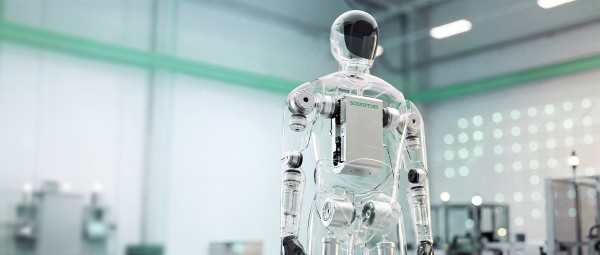
Humanoid (a UK-based startup) claims it signed a binding, phased deployment and supply agreement with Schaeffler to integrate humanoid robots into live manufacturing operations, with first systems live in Germany before the end of 2026. It also states Schaeffler becomes a preferred actuator supplier and that the plan targets a “four-digit number of wheeled units” across Schaeffler’s global facilities by 2032. (thehumanoid.ai)
What’s missing for operators/investors: “binding” and “phased” can still hide major contingencies (acceptance tests, uptime targets, unit economics, and site-by-site signoff). The announcement does not (in the excerpt) provide the per-site ramp schedule, task list, service model, or pricing.
A note on “scaling week” social signals
A LinkedIn post by Chris Paxton describes “a week of scaling announcements,” referencing multiple companies and artifacts (factory videos, a “data factory,” deployments, low-cost manipulators) as a roundup. This is useful as market color, but it’s not a primary disclosure and usually lacks the specificity needed for procurement decisions. (LinkedIn)
The numbers, in plain English (without hype)
“5,000th mass-produced” (AGIBOT) vs. “shipped 5,100 in 2025” (Forbes)
- If AGIBOT truly rolled out a 5,000th “mass-produced” humanoid unit, that suggests a non-trivial manufacturing capability and supply chain—not just hand-built prototypes. (Humanoid Robotics Technology)
- The Forbes piece cites shipments and market share (e.g., “roughly 5,100 units in 2025,” “39% share,” “10,000 cumulative”), but those figures are not presented as audited results in the excerpt. Treat them as directional indicators, not purchase-grade evidence. (Forbes)
Operator takeaway: large unit counts are only meaningful if you know how many are (a) actually deployed vs. in warehouses, (b) doing productive work vs. “friendly demo cycles,” and (c) operating under a safety and maintenance regime your site can replicate.
BMW’s pilot language is a maturity signal, not a scale claim
BMW is explicitly describing a pilot at Leipzig and references a prior pilot at Spartanburg. That matters because automakers generally have mature industrial engineering processes and safety requirements; if a humanoid pilot is accepted into those workflows, it’s a stronger validation than a trade-show demo. But BMW is not claiming thousands of units—just initial integration work. (BMW)
“Four-digit by 2032” is a long ramp, not an immediate rollout
Humanoid’s Schaeffler announcement targets a four-digit number of units across global facilities by 2032, with first live deployments before end of 2026. That timeline implies multi-year validation, iterative hardware/service changes, and site-by-site approvals—typical for manufacturing rollouts. (thehumanoid.ai)
Context: why these specific announcements matter
Humanoid robots face a hard commercialization bottleneck: they must operate safely and reliably in environments designed for humans, while competing against purpose-built automation (fixed robots, cobots, AMRs, conveyors) that already have strong cost/performance.
These 2026 sources matter because they map to three different “proof points”:
- Tier-1 operator validation (BMW): can a leading manufacturer justify a pilot in series production contexts? (BMW)
- Manufacturing throughput claims (AGIBOT/AgiBot): can a vendor build in volume rather than prototype quantities? (Humanoid Robotics Technology, Forbes)
- Commercial contracting (Humanoid + Schaeffler): can a vendor land a multi-site agreement with a global industrial player (even with a multi-year ramp)? (thehumanoid.ai)
Why it matters (practical impact)
For factory operators
- Pilots are becoming “real work”: BMW’s “in production” framing suggests pilot programs are being evaluated against actual production constraints (safety, takt impact, downtime). (BMW)
- Supplier ecosystems are forming: Humanoid’s announcement explicitly ties a robot vendor to an actuator supplier relationship (Schaeffler). That kind of pairing can reduce integration risk—but only if performance and service terms are proven on your tasks. (thehumanoid.ai)
For buyers and distributors
- Ask for “task packages,” not humanoid specs: A “mass-produced” milestone doesn’t tell you whether the robot can do your material handling, kitting, inspection, or machine tending tasks at required cycle times. Push vendors for task-specific acceptance criteria.
For founders and investors
- The battleground is operational metrics: unit counts and demos are less predictive than metrics like time-to-deploy, interventions per shift, and service gross margin. Many of those are not disclosed in the cited sources; that’s a key diligence gap.
Competitive / market context (what we can and can’t verify)
- The sources provide signals that multiple humanoid programs are advancing, but they do not offer a consistent, audited basis to rank “largest maker,” “market share,” or “most deployed.” For example, Forbes cites Agibot shipment and share figures (Forbes), while the HRT article highlights AGIBOT’s 5,000th rollout milestone (Humanoid Robotics Technology).
- Social roundups can identify “who’s making noise,” but they aren’t evidence of repeatable deployments. (LinkedIn)
What we can cautiously say: OEM pilots (BMW) + vendor unit-count claims (AGIBOT/AgiBot) + a disclosed phased enterprise agreement (Humanoid + Schaeffler) collectively indicate momentum toward commercialization.
What we cannot verify from these sources alone: true global shipment totals, how many robots are working daily in production, unit economics, or comparative performance across vendors.
Practical implications: how to read humanoid announcements as an operator
Use this checklist when you see “mass production” or “thousands of units” headlines:
- Deployment definition: Does “deployed” mean shipped, installed, or doing productive work on a defined task?
- Unit count clarity: Is the number a cumulative build, a shipment number, or a contracted future target?
- Task scope: What exact tasks are in scope (pick-and-place, tote handling, line-side kitting, inspection)?
- Autonomy level: Teleop, supervised autonomy, or unsupervised? What is the intervention rate?
- Safety case: What standards/process are being used for risk assessment and site acceptance?
- Service model: Who maintains it, what spares are required, and what’s the response time?
BMW’s announcement checks the “serious operator pilot” box, but leaves most technical details undisclosed. (BMW) Humanoid’s Schaeffler deal checks the “commercial agreement” box, but is explicitly phased through 2032. (thehumanoid.ai)
What we are not concluding (uncertainty and limits)
- We are not concluding that humanoid robots are broadly ready to replace conventional automation in most factories.
- We are not concluding that any one vendor has definitively “won” manufacturing scale; shipment/build numbers cited in media may not be independently audited. (Forbes)
- We are not concluding that BMW’s pilot implies near-term fleet-scale procurement; the announcement is explicitly a pilot and does not disclose unit counts. (BMW)
- We are not concluding that Humanoid’s “four-digit” target is guaranteed; phased deployments typically depend on meeting performance and operational milestones. (thehumanoid.ai)
What to watch next (evidence that upgrades these claims)
- BMW pilot specifics: vendor name(s), number of robots, task(s), and any disclosed safety/process learnings. (BMW)
- AGIBOT/AgiBot deployment details: how many of the “mass-produced” units are in continuous operation, and in what verticals/tasks. (Humanoid Robotics Technology)
- Humanoid + Schaeffler ramp milestones: first live system date, site count, and whether the rollouts expand beyond “wheeled units” into other configurations. (thehumanoid.ai)
- Standard metrics: look for any vendor or operator publishing intervention rate, uptime, and cost per productive hour—those are the real comparables.
Where to go next
- Browse vendors and platforms: /brands
- Compare humanoid robots (where specs and availability are disclosed): /compare
- Explore humanoid deployments and applications: /explore
FAQ
What did BMW actually announce about humanoid robots?
BMW Group announced it will launch a pilot project with humanoid robots at its Leipzig plant in Germany and said a first pilot deployment was successfully completed at its Spartanburg plant in the U.S., according to a Feb 27, 2026 press release. (BMW)
Did AGIBOT really build 5,000 humanoid robots?
A Humanoid Robotics Technology article reports that AGIBOT announced the roll-out of its 5,000th mass-produced humanoid robot at its factory. The article excerpt does not provide independent auditing or deployment performance details, so operators should treat it as a company milestone report until corroborated by additional disclosures. (Humanoid Robotics Technology)
What is the Humanoid–Schaeffler deal, in plain terms?
Humanoid says it signed a binding, phased deployment and supply agreement with Schaeffler, with first systems going live in German production environments before end of 2026 and a target of deploying a four-digit number of wheeled units across Schaeffler’s global facilities by 2032. (thehumanoid.ai)
Do these announcements prove humanoids are ready for broad factory rollout?
No. BMW’s announcement is explicitly a pilot, and the other sources cite milestones and targets that do not include key operational metrics like uptime, intervention rate, and cost per productive hour. The announcements are best read as early commercialization signals, not proof of general readiness. (BMW, Humanoid Robotics Technology, thehumanoid.ai)
What should a factory operator ask vendors after seeing “mass production” claims?
After seeing humanoid “mass production” claims, a factory operator should ask for task-specific acceptance criteria (cycle time and quality), autonomy level and intervention rates, uptime/MTBF targets, safety documentation for the intended environment, maintenance/spares requirements, and a clear service/SLA model.
Sources
- https://www.press.bmwgroup.com/global/article/detail/T0455864EN/bmw-group-to-deploy-humanoid-robots-in-production-in-germany-for-the-first-time?language=en
- https://humanoidroboticstechnology.com/industry-news/agibot-announces-the-deployment-of-its-5000th-mass-produced-humanoid-robot
- https://thehumanoid.ai/humanoid-secures-landmark-deal-with-schaeffler-to-deploy-thousands-of-humanoid-robots
- https://www.forbes.com/sites/johnkoetsier/2026/05/19/worlds-biggest-humanoid-robot-maker-the-tipping-point-is-near
- https://www.linkedin.com/posts/chris-paxton-41aba958_a-week-of-scaling-announcements-in-robotics-activity-7456351053958098944-137g