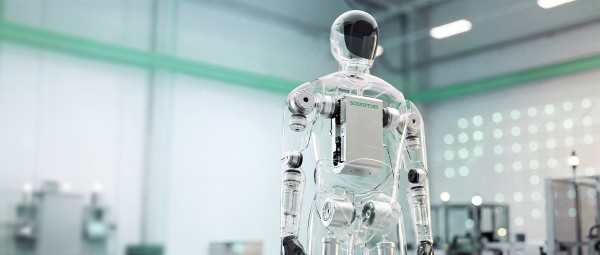
Recent headlines in humanoid robotics technology are increasingly framed around production and deployment rather than prototypes. Over 2024–2026, multiple sources point to three repeating signals: (1) OEMs discussing humanoids on factory floors, (2) vendors claiming higher unit counts, and (3) new “general-purpose” platforms debuting with industrial positioning.
This post treats those signals as evidence to interpret, not proof that humanoids are already turnkey for most factories. For operators and buyers, the practical question is: what do these announcements imply about readiness, supply, support, and risk?
Quick answer
Several public sources indicate humanoid robotics is moving from lab demos toward early operational trials and scaled manufacturing claims—including BMW Group stating it will deploy humanoid robots in production in Germany for the first time (BMW press release) and AGIBOT claiming rollout of its 5,000th mass-produced humanoid robot (LinkedIn post). Separately, Humanoid Robotics Technology reports new platform launches such as Kepler’s “Forerunner K2” debut at GITEX GLOBAL 2024 (Kepler K2 article).
Why it matters: these are leading indicators that some vendors are preparing for larger-volume build and that some industrial sites are willing to trial humanoids. But most announcements still omit the details operators need—unit hours, uptime, safety case, task list, integration effort, and commercial terms—so they should be treated as directional, not definitive proof of broad readiness.
What happened (and what’s verifiable)
1) BMW: explicit intent to use humanoids in German production
BMW Group’s press site states it will deploy humanoid robots in production in Germany for the first time (source).
What we can safely infer from that phrasing:
- BMW is positioning humanoids as a production environment tool, not a research-only curiosity.
- The statement implies an organizational willingness to address industrial constraints (line safety, change management, process engineering).
What remains unclear from the press-page excerpt accessible here:
- Which robot model/vendor is being used, how many units, and which plant/line.
- The task scope (material handling vs. assembly-adjacent tasks vs. inspection).
- Whether this is a pilot, a limited deployment, or a staged rollout.
2) AGIBOT: a “5,000th humanoid” milestone claim
A LinkedIn post by Humanoid Robotics Technology reports that AGIBOT announced the roll-out of its 5,000th mass-produced humanoid robot (source).
What’s clear:
- A unit-count milestone is being publicly claimed.
What is not clear from the accessible post alone:
- Whether “roll-out” means manufactured, shipped, installed, or operating.
- The product configuration(s): “humanoid” can cover a wide range of payloads, hands/end-effectors, and autonomy levels.
- Where those units are deployed and under what commercial model (sale, lease, RaaS, internal).
Operationally, “5,000th” is an important signal only if paired with field performance data: mean time between intervention, safety incidents, task success rates, and support capacity. None of that is provided in the LinkedIn snippet.
3) Kepler Robotics: new “Forerunner K2” platform positioned as general-purpose
Humanoid Robotics Technology reports that Shanghai Kepler Robotics Co., Ltd. launched its full-sized, general-purpose humanoid robot “Forerunner K2” at GITEX GLOBAL 2024 (source).
What’s clear:
- A product debut occurred at a major tech event with an explicit “general-purpose” positioning.
What’s unclear / not specified (in the excerpt we can verify):
- Detailed specifications (payload, endurance, safety ratings), certification status, and commercial availability.
- Evidence of sustained operation in real industrial workflows beyond event demonstrations.
4) Market sizing claims: high growth forecasts, but methodology varies
MarketsandMarkets publishes a humanoid robot market analysis claiming the market was USD 2.92B in 2025 and projected to reach USD 15.26B by 2030 (39.2% CAGR) (source).
These figures are useful as a directional indicator of investor and vendor expectations, but they are not operational proof. Market reports often differ materially based on what counts as a “humanoid,” what price assumptions are used, and whether “revenue” includes services.
Context: why “production” talk is increasing now
From an operator perspective, the current wave of announcements fits a recognizable pattern:
- Industrial pull: factories want flexibility for tasks that are expensive to automate with fixed tooling.
- Compute and training pipelines: vendors increasingly position autonomy stacks as improving via data capture in industrial settings (often stated in vendor messaging).
- Hardware readiness narrative: new entrants emphasize hands, force control, and human-safe operation—even when hard metrics are not disclosed.
The Humanoid Robotics Technology “Humanoid Production” news section aggregates multiple production-oriented items (category page/feed: page, feed). Treat it as an index of claims rather than a validation layer.
Why it matters (buyers, operators, investors)
For operators and buyers
These announcements raise the probability that:
- You’ll be asked to host a humanoid proof-of-concept.
- Vendors will pitch humanoids as a way to reduce custom automation engineering.
- The near-term winning deployments will be narrow, repetitive, supervised tasks with clear stop conditions.
The practical implication: procurement and EHS teams should prepare a standardized intake process for humanoid trials—what data you require, what safety documentation is mandatory, and what integration boundaries are allowed.
For founders and robotics vendors
Public “production” signals set expectations for:
- Spare parts availability and field service coverage.
- Version control and change management (hardware revisions can break validated processes).
- Support for compliance and safety documentation demanded by enterprise buyers.
For investors
The main investable question is not “is it mass produced?” but:
- Are there repeatable deployments with measurable KPIs?
- Can the vendor support fleets (maintenance, updates, training, warranty) without margin collapse?
The numbers, in plain English (and what they do NOT prove)
“5,000th robot” (AGIBOT)
A claim of a 5,000th unit milestone (source) could mean several very different realities:
- Built: 5,000 units left a factory line.
- Shipped: units were delivered to customers.
- Deployed: units were installed in facilities.
- Operational: units perform tasks with meaningful utilization.
Only the last interpretation directly impacts labor planning and ROI models, and it requires utilization and reliability data that is not provided in the accessible post.
“Deploy humanoids in production” (BMW)
BMW’s statement (source) is meaningful because it names an industrial production context, but it still does not answer:
- How many robots?
- Which tasks?
- What human supervision?
- What cycle time impact?
In other words, it’s a strong signal of intent, not a published performance benchmark.
Market forecasts (MarketsandMarkets)
A CAGR forecast (source) is not a deployment metric. Use it for:
- Budgeting “category tailwinds.”
- Stress-testing whether supply chains and training pipelines will need to scale.
Do not use it as evidence that a specific robot will achieve target cost, uptime, or payback.
Practical implications: how to evaluate humanoid “production readiness”
If you are considering a trial or purchase, ask for concrete deliverables that map to your plant reality.
Minimum diligence checklist (request in writing):
- Task definition: exact picks/places, tools, payload range, required tolerances.
- Safety case: hazards, risk assessment method, emergency stop behavior, permitted proximity.
- Uptime and intervention: average interventions per hour/shift, remote support process.
- Integration: how it interfaces with WMS/MES, scanners, fixtures, conveyors, doors.
- Data & privacy: what is recorded (video/telemetry), retention, on-prem options.
- Commercial terms: who owns downtime risk, spare parts lead times, warranty boundaries.
These are the gaps most announcements do not cover, including the ones cited above.
Competitive/context view (careful, source-limited)
From the provided sources, we can compare only public signals, not performance:
- BMW’s press release is an end-user OEM signal that factories are trialing humanoids.
- AGIBOT’s “5,000th” claim is a vendor scale signal, but the deployment meaning is ambiguous.
- Kepler’s K2 debut is a new platform introduction signal.
What we cannot verify from the provided sources:
- Which vendor has the highest real-world utilization.
- Cost per hour, safety certification maturity, or reliability rankings.
- Whether any of these systems are broadly commercially available with defined SLAs.
What we are not concluding (uncertainty and overreads to avoid)
- We are not concluding that humanoids are ready to replace large segments of factory labor today.
- We are not concluding that “mass-produced” equals “profitably deployed at scale.”
- We are not concluding that BMW’s statement implies a large fleet deployment; it could be a limited pilot.
- We are not concluding that the market forecast guarantees near-term revenue for any specific company.
The main uncertainty across sources is the lack of standardized disclosure: unit-hours, task success rate, intervention rate, and safety performance.
What to watch next (signals that actually change the operator decision)
Over the next 6–18 months, the updates that matter most are:
- Task-level KPIs published by end users (cycle time impact, defect rate, downtime).
- Clear definitions of “deployment” (installed vs operating) and “mass production” (monthly output).
- Third-party safety validation or explicit safety standards alignment.
- Fleet management maturity: OTA update controls, incident logging, and rollback processes.
If AGIBOT or others provide a primary announcement link with operational details (the LinkedIn post references an external link), that would materially improve evaluability.
Where to go next (HumanoidHub)
- Browse current vendors and platforms: /explore
- Compare categories and positioning: /compare
- Navigate by manufacturer listings: /brands
(If you have a specific robot model in mind, HumanoidHub can map it to a dedicated /robots/{slug} page once a verified model profile is available.)
FAQ
What did BMW announce about humanoid robots?
BMW Group stated it will deploy humanoid robots in production in Germany for the first time, according to its official press site. The announcement signals an industrial trial intent, but the accessible source does not specify unit count, tasks, or performance metrics. Source: BMW press release.
Did AGIBOT really deploy 5,000 humanoid robots?
A post shared by Humanoid Robotics Technology reports that AGIBOT announced the roll-out of its 5,000th mass-produced humanoid robot. The post does not clarify whether “roll-out” means manufactured, shipped, installed, or operating in the field, so the operational meaning of the number remains uncertain from the accessible snippet alone. Source: LinkedIn post.
What is the Kepler Forerunner K2 humanoid robot?
Humanoid Robotics Technology reports that Shanghai Kepler Robotics Co., Ltd. debuted a full-sized, general-purpose humanoid robot called Forerunner K2 at GITEX GLOBAL 2024. The accessible source confirms the debut and positioning but does not provide complete buyer-grade specifications or deployment evidence. Source: Kepler K2 article.
How should a factory interpret “mass production” claims in humanoid robotics?
In humanoid robotics, “mass production” can mean units are being built in volume, but it does not automatically imply high uptime, low intervention rates, or mature field support. A factory should require task KPIs, safety documentation, and support terms before treating “mass production” as readiness for operational reliance. Example claim source: AGIBOT milestone post.
What is a credible near-term use case for humanoid robots in factories?
A credible near-term use case for humanoid robots in factories is a narrow, well-instrumented task where the robot can be supervised, stopped safely, and measured—such as structured material movement or repetitive handling steps—because this reduces integration risk and enables clear ROI accounting. BMW’s announcement is an example of an OEM exploring production deployment, but task details are not provided in the accessible source. Source: BMW press release.
Sources
- BMW Group press release: https://www.press.bmwgroup.com/global/article/detail/T0455864EN/bmw-group-to-deploy-humanoid-robots-in-production-in-germany-for-the-first-time?language=en
- AGIBOT milestone (via Humanoid Robotics Technology on LinkedIn): https://www.linkedin.com/posts/humanoid-robotics-technology_agibot-announces-deployment-of-5000th-humanoid-activity-7404443841119805441-LcIm
- Kepler Forerunner K2 debut: https://humanoidroboticstechnology.com/news/shanghai-kepler-robotics-co-ltd-debuts-forerunner-k2-humanoid-robot
- Humanoid production news index/feed: https://humanoidroboticstechnology.com/category/news/humanoid-production and https://humanoidroboticstechnology.com/category/news/humanoid-production/feed
- MarketsandMarkets market analysis: https://www.marketsandmarkets.com/ResearchInsight/humanoid-robot-market-analysis.asp