Humanoid robotics technology is shifting from impressive demos toward tightly-scoped pilots in real facilities. The most concrete 2026 signal in the sources provided is BMW Group’s announcement that it will run a first pilot deployment of humanoid robots in production in Germany (Leipzig), following a pilot in Spartanburg, USA, as part of a broader “Physical AI” push in manufacturing. That matters because OEM factories are among the most demanding environments for reliability, safety, and integration with existing processes.
At the same time, vendors like Agility Robotics are positioning humanoids as “industrial humanoid automation,” and industry groups like the International Federation of Robotics (IFR) continue to stress a “vision vs. reality” gap. Market research and investor research pieces argue the sector is moving from pilot programs to platform strategies, but they often omit operator-grade details (uptime, safety case, unit counts, task cycle times, and support model).
Quick answer
BMW Group says it will pilot humanoid robots in production at its Leipzig plant in Germany (after a prior pilot at Spartanburg in the US), framing the work as “Physical AI” that integrates AI with real machines on the factory floor. For humanoid robotics, this is a meaningful step because it reflects a large manufacturer testing integration into existing series production—not just lab demonstrations. What remains unclear from public sources are the basics operators need to evaluate readiness: how many robots, which exact tasks, what performance targets, and what safety and maintenance KPIs will decide whether pilots scale. (Source: BMW Group press release)
Context: what “humanoid robotics technology” means (and why it’s hard)
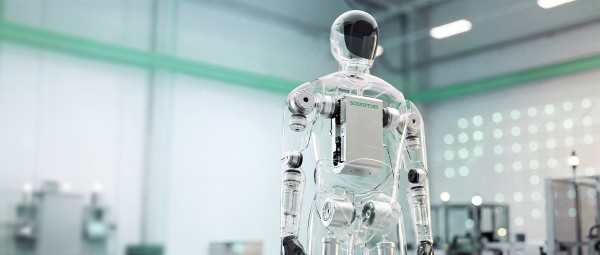
A humanoid robot is generally defined by a human-like body plan—typically a torso, head, two arms, and two legs—intended to operate in human environments and use human tools, or to study bipedal locomotion and related research questions. (Source: Wikipedia: Humanoid robot)
That body plan creates a technology stack with more coupled failure modes than most industrial automation:
- Locomotion: bipedal balance and foot-ground interaction in cluttered spaces.
- Manipulation: reaching, grasping, and placing across varied objects, tolerances, and lighting.
- Perception + planning: recognizing what matters in a scene and choosing safe actions.
- Safety engineering: ensuring predictable behavior around people and equipment.
- Integration: connecting into plant systems, work instructions, QA, and maintenance workflows.
The point of the humanoid form isn’t “human likeness” for its own sake; it’s the promise of compatibility with spaces built for humans (aisles, stairs, hand tools, carts, bins). But that compatibility only pays off when reliability and total cost of ownership beat simpler automation or process redesign.
What happened: BMW’s Europe pilot + “Physical AI” framing
BMW Group’s press release states it is launching a pilot project with humanoid robots at its Leipzig plant—its first such deployment in production in Germany—after a “first pilot deployment” was completed at BMW Plant Spartanburg in the United States. BMW also describes a new “Center of Competence for Physical AI in Production,” intended to accelerate integration of AI and robotics in production. (Source: BMW Group press release)
What we can and cannot confirm from the BMW release
Known (stated):
- A pilot project at Leipzig is planned/starting and is framed as the first such deployment in Germany.
- A prior pilot deployment was completed at Spartanburg.
- BMW intends to explore further applications including batteries and components.
Unknown (not stated in the provided excerpt/source summary):
- Which humanoid robot model(s) are involved.
- Unit count, pilot duration, shifts covered, or target tasks.
- Safety approach (speed-and-separation monitoring, power/force limiting, fenced cell vs. shared space).
- Success criteria (throughput, defect rate impact, MTBF/MTTR, operator acceptance).
For operators and buyers, those unknowns matter more than the headline.
Why it matters: the operator-grade bar is different in factories
A credible factory pilot implies at least three things:
- Integration effort is funded and prioritized. Connecting a humanoid into a live production environment requires work instructions, digital traceability, training, and escalation paths.
- Risk is being managed formally. Even a fenced pilot forces safety engineering and change control.
- There is a measurable business hypothesis. In production, “cool demo” doesn’t survive if it can’t hit cost, quality, or flexibility targets.
The IFR’s “Humanoid robots: vision and reality” framing (as a published paper announcement) is relevant here: the industry still faces a gap between demonstrations and scalable, maintainable deployments in industrial settings. (Source: IFR press release)
The tech trendline behind the headlines: pilots → task products → platforms
Several sources in your list (market and investor research) describe the market shifting from “pilot programs” toward “task-specific industrial deployment” and the “convergence” of humanoid hardware with embodied AI/foundation-model approaches. (Sources: BIS Research market report page, KraneShares research post)
Because these are higher-level publications, treat them as directional, not operational evidence. They are useful for understanding what stakeholders claim is happening, but they don’t replace site-level metrics.
From an operator perspective, the practical interpretation is:
- Pilots are narrowing from “general-purpose humanoid” to one or two tasks that can be engineered end-to-end.
- Software is becoming the product: data pipelines, teleoperation/monitoring, updates, and workflow tooling matter as much as the robot body.
- Procurement shifts from CapEx hardware purchase to some mix of service/support/software and performance guarantees (terms typically not public).
Practical implications for operators, integrators, and buyers
If you are evaluating humanoid robotics technology now, the key is to structure engagement so you can learn fast without betting your line on promises.
1) Define “work” as a bounded task, not a job role
Most failures come from vague goals (“do material handling”). Write a task spec:
- pick/place objects with defined range of sizes/weights
- required takt time and allowable variance
- quality acceptance (e.g., placement tolerances)
- permitted error handling behavior
2) Ask for evidence in the language of reliability
Before you care about a robot’s maximum lift or demo agility, ask:
- mean time between intervention (MTBI)
- how many human assists per shift
- recovery procedures after a fault
- parts lead times and on-site support model
The public sources provided do not include these metrics for specific robots; that absence is itself a planning constraint.
3) Treat “production deployment” claims carefully
Agility Robotics’ site describes Digit as “the first humanoid robot in production deployment” and references “Arc” as the cloud platform that runs it. That is a meaningful positioning statement, but the site copy (as provided) does not include unit counts, customer names, or performance stats necessary to independently validate breadth of deployment. (Source: Agility Robotics)
4) Prepare your facility for pilot friction
Even if the robot is capable, pilots commonly stall on:
- network/security approvals
- workflow redesign (bins, dunnage, carts)
- safety zoning and signage
- change management with line staff
Numbers, timelines, and claims (plain-English read)
The provided sources contain relatively few hard numbers that can be safely repeated without overreach.
-
BMW pilot (Feb 2026): BMW publicly dates the announcement (Feb 27, 2026) and states the Leipzig pilot plus a prior Spartanburg pilot. It does not provide public unit counts or throughput targets in the excerpt provided. (Source: BMW Group press release)
-
Market forecast pages (e.g., BIS Research): These pages describe report scope and themes (2026–2035), but without full report access the detailed figures, methods, and assumptions are not visible here. Use such sources to frame questions, not to anchor investment-grade numbers. (Source: BIS Research)
-
“Ranked best humanoid robots” lists: The Robozaps list includes strong claims about “best” robots, pricing, production ramp, and annual capacity. Because those are not corroborated in the other primary sources you provided—and lists often mix marketing, estimates, and partial disclosures—HumanoidHub would not treat those specific numbers as verified without additional primary documentation. (Source: Robozaps list)
Competitive / ecosystem context (what’s verifiable vs. not)
Publicly, a few ecosystem facts are easy to verify from vendor pages:
- Agility Robotics positions Digit for industrial use and emphasizes a supporting software platform (Arc). (Source: Agility Robotics)
- Boston Dynamics positions Atlas as a product line (notably, Atlas has historically been a flagship R&D platform; commercial details and availability are not stated on the page itself). (Source: Boston Dynamics Atlas)
- Engineered Arts markets Ameca as a humanoid robot platform oriented toward interaction/entertainment and exhibitions, which is a different buying category than factory automation. (Source: Engineered Arts Ameca)
What is not verifiable from these sources alone:
- Who is “winning” on deployment scale.
- True production volume, unit shipments, or contracted backlog.
- Comparative task performance under the same conditions.
What we are not concluding (to avoid overreading the story)
- A BMW pilot does not mean humanoids are broadly ready for automotive assembly lines.
- “Physical AI” branding does not specify safety architecture, autonomy level, or labor impact.
- Vendor claims of “production deployment” do not automatically imply multi-site scale, high uptime, or favorable economics.
The sources support a narrative of serious experimentation and early integration—not a settled winner or a solved product category.
What to watch next (signals that matter)
If BMW or other manufacturers expand disclosures, the most decision-useful signals will be:
- Task disclosure: exactly which operations the humanoid is doing (kitting, tote handling, machine tending, inspection support, etc.).
- Operating model: autonomy level vs. teleop, number of human supervisors per robot.
- Safety case summary: shared space or segregated, and how risk is controlled.
- Scale intent: additional plants, additional shifts, or supplier ecosystem commitments.
For the broader sector, watch for more peer-reviewed or benchmark-style publications (methodology disclosed, repeatable tests) rather than marketing videos.
Where to go next (HumanoidHub)
- Explore the broader landscape of humanoid vendors and platforms: /explore
- Browse manufacturers and company pages: /brands
- Compare robots side-by-side when specs and sourcing are available: /compare
FAQ
What is a humanoid robot?
A humanoid robot is a robot designed with a human-like body plan (often a torso, head, two arms, and two legs) to operate in environments and use tools built for humans, or to support research in bipedal locomotion and human-like movement. (Source: https://en.wikipedia.org/wiki/Humanoid_robot)
What did BMW Group announce about humanoid robots?
BMW Group announced it will launch a pilot project deploying humanoid robots in production at its Leipzig plant in Germany, and said a first pilot deployment was previously completed at BMW Plant Spartanburg in the United States. (Source: https://www.press.bmwgroup.com/global/article/detail/T0455864EN/bmw-group-to-deploy-humanoid-robots-in-production-in-germany-for-the-first-time?language=en)
Does a “pilot deployment” mean humanoid robots are ready for mass rollout?
A pilot deployment does not mean humanoid robots are ready for mass rollout; it usually means a manufacturer is testing integration, safety, reliability, and economics on a constrained task. Public announcements often omit the operational metrics needed to judge readiness, such as uptime, intervention rate, and cost per task cycle. (Source context: BMW press release)
What should factory operators ask humanoid robot vendors before a pilot?
Factory operators evaluating humanoid robots should ask about the exact task scope, takt time targets, safety approach, supervision model (human assists per shift), recovery procedures, maintenance plan, and parts lead times—because these determine whether the pilot can run reliably in production conditions. (No single provided source contains these metrics; this is an operator-oriented checklist.)
What does the IFR mean by “vision and reality” for humanoid robots?
The International Federation of Robotics (IFR) highlights a “vision and reality” gap for humanoid robots, reflecting that the technology’s promise is ahead of what is consistently proven at scale in real industrial deployments. (Source: https://ifr.org/ifr-press-releases/news/humanoid-robots-vision-and-reality-paper-published-by-ifr)
Sources
- https://www.press.bmwgroup.com/global/article/detail/T0455864EN/bmw-group-to-deploy-humanoid-robots-in-production-in-germany-for-the-first-time?language=en
- https://www.agilityrobotics.com
- https://ifr.org/ifr-press-releases/news/humanoid-robots-vision-and-reality-paper-published-by-ifr
- https://en.wikipedia.org/wiki/Humanoid_robot
- https://bostondynamics.com/products/atlas
- https://engineeredarts.com/robots/ameca
- https://bisresearch.com/industry-report/humanoid-robot-market.html
- https://kraneshares.com/humanoid-robotics-in-2026-the-race-from-pilot-to-platform
- https://blog.robozaps.com/b/best-humanoid-robots
- https://humanoidroboticstechnology.com