Humanoid robotics is starting to generate the kinds of signals operators and buyers look for: unit-count milestones, named factory pilots, and repeatable production narratives. In the past few months, a handful of sources have pointed to a transition from “cool demo” to “early operational trials,” especially in China and automotive manufacturing.
This brief synthesizes three concrete items: AGIBOT’s claim that it rolled out its 5,000th “mass-produced” humanoid, BMW Group’s announcement of a first pilot deployment in Germany (Leipzig), and Shanghai Kepler Robotics’ debut of the Forerunner K2. It also flags what is not in the public record yet (like verified run-hours, safety cases, and unit economics).
Quick answer
What happened and why does it matter for humanoid robotics?
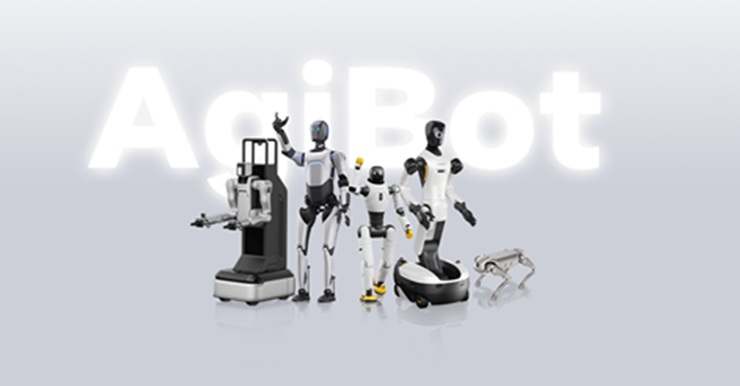
- AGIBOT says it rolled out its 5,000th mass-produced humanoid robot at its factory—an attention-grabbing unit-count claim that, if borne out in deployments, would indicate real progress on repeatable manufacturing and fieldability. Source: Humanoid Robotics Technology.
- BMW Group announced it will deploy humanoid robots in production in Germany for the first time, via a pilot at Plant Leipzig, and also said a first pilot deployment was successfully completed at Plant Spartanburg (USA). Source: BMW Group press release.
- China-based platform announcements continue, including Shanghai Kepler Robotics’ Forerunner K2 debut. Source: Humanoid Robotics Technology.
Why it matters: these are the types of developments that can precede broader adoption—but the publicly available material still lacks the operational details buyers need (validated uptime, MTBF, safety certification scope, integration cost, and who is paying for what).
What’s new: the most verifiable signals
1) AGIBOT’s “5,000th mass-produced humanoid” claim
Humanoid Robotics Technology reports that AGIBOT “officially roll[ed] out” its 5,000th mass-produced humanoid robot at its factory and frames this as progress in “stability, reliability, and durability.” The same piece also states that AGIBOT’s full-size “A-Series” has achieved mass production with 1,742 units (as reported by the outlet). Source: AGIBOT 5,000th rollout article.
What we can and can’t conclude from this number
- What’s clear: A specific unit-count milestone is being claimed publicly, and the outlet provides sub-count detail for at least one product line (A-Series: 1,742 units per the article).
- What’s unclear: whether “roll-out” equals shipped to paying customers, deployed into customer operations, built and warehoused, or assembled for internal testing. The article, as published, does not provide a customer list, acceptance criteria, or independent audit.
2) BMW’s Leipzig pilot and “Physical AI in Production” positioning
BMW Group states it is launching a pilot project with humanoid robots at BMW Group Plant Leipzig, aiming to integrate humanoid robotics into existing series production and to explore additional applications in batteries and components. BMW also says a first pilot deployment was successfully completed at Plant Spartanburg (USA) and announces a “Center of Competence for Physical AI in Production.” Source: BMW press release (Feb 27, 2026).
From an operator perspective, BMW’s wording matters because it’s anchored in named plants and an explicit pilot framing—more concrete than generic “we’re exploring humanoids.” However, BMW’s release does not (in the visible excerpt) specify:
- the robot vendor(s),
- the number of robots,
- the tasks beyond general integration intent,
- measurable KPIs (cycle time, defect rate, ergonomic risk reduction),
- or details of the safety case.
3) Shanghai Kepler Robotics’ Forerunner K2 debut
Humanoid Robotics Technology reports that Shanghai Kepler Robotics Co., Ltd. debuted the Forerunner K2 humanoid robot. Source: Forerunner K2 debut article.
This is best interpreted as a platform-entry signal rather than a deployment signal. A debut announcement usually indicates productization intent, but not necessarily field maturity.
Context: why these announcements are clustering now
Two broad forces are visible across the sources:
-
Industrial buyers are testing humanoids where ROI is legible (automotive plants are a common first venue). BMW’s pilot language fits a pattern: start with controlled tasks and constrained areas, then expand.
-
China’s embodied AI and manufacturing ecosystem is pushing hard on production narratives. MERICS’ analysis describes China’s ambitions and ecosystem-building around embodied AI and robotics. Source: MERICS report.
Separately, industry commentary pieces are increasingly framing 2025 as a turning point in demos and pilots. This is directionally informative but should be treated as opinion unless backed by hard deployment metrics. Source example: “2025: The Year of the Humanoid”.
The numbers, in plain English (and what they do not prove)
“5,000 mass-produced humanoids”
If a company truly has thousands of units operating in the field, that typically implies at least some maturity in:
- supply chain repeatability,
- manufacturing yield,
- maintenance workflows,
- and software update processes.
But the public claim reported here does not specify:
- how many units are deployed vs. produced,
- the deployment duration (days vs. months),
- fleet uptime,
- how failures are counted,
- or whether customers are paying versus participating in subsidized pilots.
So treat the AGIBOT number as a manufacturing/rollout milestone claim, not yet as a verified “thousands of robots doing paid work” signal. Source: AGIBOT milestone article.
“BMW is deploying humanoids in production”
BMW’s statement is meaningful because a major manufacturer is publicly tying humanoids to production integration and creating an organizational center around it. But “deploy” here is explicitly within a pilot framing, and no unit counts or KPIs are disclosed in the press release excerpt. Source: BMW press release.
Why it matters (operators, buyers, founders, investors)
For operators and buyers
These signals suggest 2026 procurement conversations may shift from “can it walk?” to:
- What task cell is it assigned to? (kitting, tote handling, machine tending, internal logistics)
- What are the integration primitives? (MES hooks, safety I/O, changeover time)
- What’s the sustaining plan? (spares, remote ops, retraining cadence)
BMW’s plant pilots are particularly relevant because automotive has well-defined takt time pressures and strong safety culture—if humanoids can survive there, they may translate to other discrete manufacturing settings.
For founders and engineers
The competitive boundary is moving toward:
- robust manipulation under variance,
- perception that holds up under factory lighting and occlusion,
- maintainability and field service,
- and “boring” manufacturing engineering (test fixtures, calibration, QA).
For investors and distributors
The key diligence question is no longer only “does it work in a demo?” but “does the company have a credible path to:
- manufactured unit cost reduction,
- warranty exposure control,
- and repeatable deployments with quantified KPIs?”
Competitive / ecosystem context (careful comparisons)
-
China production narratives: Multiple China-based humanoid announcements and milestones are being reported, including AGIBOT and Shanghai Kepler Robotics. Source: AGIBOT milestone, Forerunner K2 debut, plus ecosystem framing from MERICS.
-
Europe/US manufacturing pilots: BMW’s announcement is a notable Europe signal anchored to a top-tier manufacturer’s own plants. Source: BMW press release.
What we cannot verify from the provided sources:
- which humanoid vendors are “ahead” in real deployments globally,
- comparative cost, performance, safety certification status,
- or whether any given unit-count milestone corresponds to paying customer operations.
Practical implications: what to do if you’re evaluating humanoids now
-
Demand “task definition” clarity. Ask vendors to specify: object set, weight range, placement tolerances, required cycle time, and allowable failure modes.
-
Separate “produced” from “deployed.” Request a written breakdown: built units, shipped units, installed units, and units operating >30/90 days.
-
Ask for the safety envelope. For factory work, you need the boundary conditions: speed limits, force/torque limits, sensing, E-stop architecture, and the risk assessment artifacts.
-
Plan integration like a system project. Budget engineering time for fixtures, barcode/vision markers (if needed), network access, and recovery behaviors.
What we are not concluding (uncertainties and overreads)
-
We are not concluding that AGIBOT has 5,000 humanoids doing sustained paid work in customer facilities; the public item is a reported rollout milestone without deployment verification. Source: AGIBOT milestone article.
-
We are not concluding that BMW’s Leipzig pilot means broad humanoid adoption across BMW plants is imminent; pilots can remain limited for long periods, especially when safety, ergonomics, and uptime targets are strict. Source: BMW press release.
-
We are not treating new platform debuts (like Forerunner K2) as proof of readiness; debut announcements rarely include the operational KPIs buyers need. Source: Forerunner K2 debut.
What to watch next (the next 90–180 days)
-
BMW pilot details: vendor identity, tasks, number of robots, and any disclosed KPI outcomes (throughput, quality, safety incidents).
-
AGIBOT evidence of field deployment: named customers, repeat orders, or third-party validation of installed base and operating hours.
-
Standardization signals: safety and interoperability disclosures (even if only partial) that indicate scalable deployments.
-
Operator-facing documentation: training, maintenance intervals, and failure recovery processes—often the earliest “tell” of product maturity.
Where to go next (HumanoidHub)
- Browse more deployments and pilots: /explore
- Compare humanoid platforms and vendors: /compare
- Find companies and integrators by category: /brands
FAQ
Did AGIBOT really deploy 5,000 humanoid robots?
Humanoid Robotics Technology reports that AGIBOT rolled out its 5,000th mass-produced humanoid robot, but the public report does not clearly separate “produced/rolled out” from “installed and operating at customer sites,” and it does not provide independent verification. Source: https://humanoidroboticstechnology.com/industry-news/agibot-announces-the-deployment-of-its-5000th-mass-produced-humanoid-robot/
What did BMW announce about humanoid robots in Germany?
BMW Group announced a pilot project to deploy humanoid robots at BMW Group Plant Leipzig in Germany and said it is bringing “Physical AI” into European production, supported by a new Center of Competence for Physical AI in Production. Source: https://www.press.bmwgroup.com/global/article/detail/T0455864EN/bmw-group-to-deploy-humanoid-robots-in-production-in-germany-for-the-first-time?language=en
Does BMW’s pilot mean humanoid robots are ready for automotive production?
BMW’s pilot indicates serious evaluation in a demanding environment, but a pilot alone does not prove broad readiness; buyers still need data on uptime, safety case scope, maintenance burden, and cost-to-integrate before concluding production maturity. Source: https://www.press.bmwgroup.com/global/article/detail/T0455864EN/bmw-group-to-deploy-humanoid-robots-in-production-in-germany-for-the-first-time?language=en
What is the Forerunner K2 humanoid robot?
Humanoid Robotics Technology reports that Shanghai Kepler Robotics debuted the Forerunner K2 humanoid robot; the debut signals a new platform entering the market conversation, but the public announcement does not by itself establish deployment scale or operational KPIs. Source: https://humanoidroboticstechnology.com/news/shanghai-kepler-robotics-co-ltd-debuts-forerunner-k2-humanoid-robot
What should a factory operator ask before piloting a humanoid robot?
A factory operator evaluating a humanoid robot should ask for a precise task definition (objects, weights, tolerances, cycle time), evidence distinguishing produced vs. deployed units, safety documentation (risk assessment, E-stop and sensing architecture), and a sustaining plan (spares, maintenance intervals, remote support, and recovery procedures).
Sources
- https://humanoidroboticstechnology.com/industry-news/agibot-announces-the-deployment-of-its-5000th-mass-produced-humanoid-robot/
- https://www.press.bmwgroup.com/global/article/detail/T0455864EN/bmw-group-to-deploy-humanoid-robots-in-production-in-germany-for-the-first-time?language=en
- https://humanoidroboticstechnology.com/news/shanghai-kepler-robotics-co-ltd-debuts-forerunner-k2-humanoid-robot
- https://merics.org/en/report/embodied-ai-chinas-ambitious-path-transform-its-robotics-industry
- https://thehumanoid.ai/2025-the-year-of-the-humanoid/