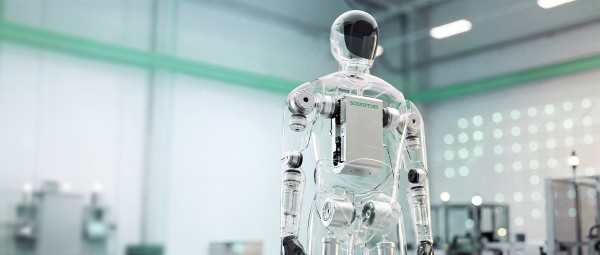
Humanoid robotics is entering a new phase where factory pilots, software stacks, and workforce questions are being discussed in the same breath. Over the past year of public signals, three threads stand out: (1) major manufacturers testing humanoids inside real production environments, (2) control and “sim-to-real” learning maturing in research and corporate labs, and (3) the industry starting to treat labor impact and deployment governance as first-order topics rather than afterthoughts.
This brief synthesizes what’s verifiable from BMW’s public deployment announcement, Toyota’s published research direction, and conference/industry materials around IEEE Humanoids 2026—without assuming scale, performance, or timelines beyond what sources state.
Quick answer
Humanoid robots are increasingly being evaluated for real factory work, not just lab demos. BMW says it will pilot humanoid robots in series-production contexts at Plant Leipzig (Germany) and has already completed a first pilot deployment at its Plant Spartanburg (USA), framing this under “Physical AI” and a new internal competence center for production integration (BMW press release). Toyota, separately, describes reinforcement-learning-based motion control and “sim-to-real” training for humanoid behaviors like walking, emphasizing a general-purpose control framework direction (Toyota Frontier Research). Meanwhile, a news report on IEEE Humanoids 2026 claims the conference is explicitly foregrounding labor displacement as a defining theme (TechTimes), signaling that the discussion is shifting from “can it move?” to “can it be deployed safely, cost-effectively, and responsibly?”
Why it matters: for operators and buyers, this indicates more pilots in constrained tasks and controlled zones, but it does not yet prove broad, lights-out humanoid automation. The open questions are still unit economics, reliability over long shifts, integration cost, and safety cases.
What happened (and what’s actually stated)
BMW: first Germany production pilot + a production integration program
BMW states it will deploy humanoid robots in production in Germany “for the first time” via a pilot project at BMW Group Plant Leipzig and that it aims to integrate humanoid robotics into existing series production and explore applications in battery and component production. BMW also states a first pilot deployment was successfully completed at BMW Group Plant Spartanburg in the United States. BMW frames this under “Physical AI” and announces a new “Center of Competence for Physical AI in Production” to accelerate integration globally (BMW press release).
What BMW does not clearly provide in the press release (as captured in the source excerpt):
- Robot model/manufacturer used in the pilot (not explicit in the excerpt provided)
- Unit count deployed
- Specific tasks, takt time impact, cycle-time performance, or uptime
- Safety metrics (near misses, incident rates), supervision mode, or operational constraints
- Commercial terms (purchase vs. lease vs. pilot partnership)
For operators, the key takeaway is not “BMW is automating the factory with humanoids,” but “BMW is investing in the organizational and systems work required to test humanoids in production settings.”
Toyota: reinforcement learning, sim-to-real, and behaviors like walking
Toyota’s Frontier Research Center describes work on AI-based control approaches for humanoids, including reinforcement learning and “Sim2Real,” and discusses training behaviors such as walking and basketball dribbling on an internal test platform (Toyota Frontier Research).
Toyota’s piece reads as a research interview, not a product launch. The practical signal is that large industrial players are treating learned control policies and transfer from simulation as important levers toward robustness.
IEEE Humanoids 2026: labor displacement as an explicit theme (reported)
A TechTimes report claims IEEE-RAS Humanoids 2026 is positioning labor displacement as a defining theme and references growing factory presence (TechTimes). Separately, the IEEE Robotics & Automation Society listing confirms the existence of the 2026 Humanoids conference event page, but it does not necessarily corroborate TechTimes’ framing word-for-word (IEEE-RAS event page).
Treat this as a directional media signal: the community is increasingly discussing workforce impact, governance, and deployment reality.
Context: why these signals cluster now
Humanoid robotics is not just a hardware story—it’s an integration + software + economics story.
- A recent arXiv review argues the field is shifting toward “humanoid AI,” emphasizing multimodal interaction and directions beyond human-like appearance toward capabilities and “humaneness” framing (arXiv:2405.15775v2). This is a survey perspective, not a deployment report.
- NVIDIA positions an end-to-end development stack for humanoid robot policies (Isaac / GR00T) as a way to develop and train policies across simulation and deployment workflows (NVIDIA developer blog). This is tooling positioning, not proof of fleet-scale operations.
- Market research publishers are increasingly describing a “pilot to deployment” transition, but detailed numbers are typically paywalled and should be treated as secondary evidence unless the exact figures are visible and attributable (BIS Research market report landing page).
Why it matters (operators, buyers, founders, investors)
1) Factory pilots change the buying conversation
A pilot in a live plant (BMW) forces clarity on questions that demos can dodge:
- What tasks are actually in scope (material handling, machine tending, kitting, inspection support)?
- What infrastructure is needed (mapping, fixtures, safety scanners, human zones, tool changers)?
- What supervision model works (teleop, shared autonomy, supervised autonomy)?
A press release won’t answer these, but it indicates the buyer is starting the hard work.
2) Learned control is becoming the default path—but verification is hard
Toyota’s emphasis on reinforcement learning and sim-to-real matches an industry-wide belief: you can’t hand-code every edge case for bipedal locomotion and dexterous manipulation. The operator-relevant question is not “does RL work?” but:
- How often does the learned policy fail under distribution shift (lighting, floor friction, payload variance)?
- How is failure detected and handled (safe stop, controlled fall, recovery behaviors)?
- What is the validation protocol before entering a human workspace?
3) Labor displacement becoming explicit will reshape procurement
If IEEE Humanoids 2026 is indeed foregrounding displacement, that mirrors what many plants already face: any humanoid deployment will trigger HR, safety, and works council conversations early.
For distributors and integrators, this raises the value of “deployment packages” (training, change management, risk assessment) rather than just a robot BOM.
The numbers, in plain English (and what’s missing)
This set of sources contains very few hard deployment numbers.
- BMW confirms a pilot at Leipzig and a completed pilot at Spartanburg, but it does not (in the provided material) disclose robot counts, operating hours, or productivity impact (BMW).
- Toyota describes behaviors and methods (RL, sim-to-real) but does not present a production benchmark like “X hours between falls” or “Y pick success rate” in the interview excerpt (Toyota).
- Market reports and investment research pages often summarize big market numbers, but if the numerical tables are not visible in-source, HumanoidHub can’t responsibly repeat them as facts. The BIS Research page shows themes and table-of-contents items, not the underlying quantified forecast (BIS Research).
Practical interpretation: these are early-to-mid pilots and enabling-tech narratives, not audited evidence of large-scale humanoid labor replacement.
Practical implications: how to evaluate humanoids for factory work in 2026
If you’re an operator or buyer considering a pilot, use these as gating questions:
- Task definition: What is the narrowest task that produces value without requiring human-level dexterity?
- Safety case: What are the stop modes, speed limits, and zone controls? Who signs off?
- Reliability: What is the expected intervention rate (per hour / per cycle)? How is “intervention” defined?
- Integration cost: What external systems must be added (cameras, depth sensors, fiducials, conveyors, fixtures)?
- Ops model: Who “owns” the robot—maintenance, IT/OT, manufacturing engineering, or a robotics team?
- Training & updates: How are policies updated and validated? Can updates be rolled back?
NVIDIA’s positioning around end-to-end policy development reinforces that software workflow maturity (data collection, sim environments, evaluation harnesses) is now part of the purchasing reality—not an R&D nice-to-have (NVIDIA).
Competitive/context check (careful comparison only)
From these sources alone, we can verify:
- BMW is publicly committing to production pilots in Germany and referencing a completed pilot in the US (BMW).
- Toyota is publicly describing reinforcement-learning humanoid control research and sim-to-real framing (Toyota).
We cannot verify from the provided sources:
- Which humanoid OEMs are “leading” on real deployments.
- Comparative uptime, cost per hour, or safety performance across vendors.
- Claims from “Top humanoid robots of 2026” listicles as factual deployment status, since those pages often mix projections with limited sourcing (example listicle).
If you need competitive comparison, treat press releases and conference demos as signals, and request: (a) site references, (b) logged operating hours, (c) intervention rate definitions, and (d) integration bill-of-materials.
What we are not concluding (uncertainty and limits)
- We are not concluding that humanoids are already broadly replacing factory labor. The sources here do not provide the unit counts, operating-hour evidence, or ROI calculations required to make that claim.
- We are not concluding that reinforcement learning has solved “general-purpose humanoid control.” Toyota’s interview describes research direction and selected behaviors, not universal robustness (Toyota).
- We are not concluding that IEEE Humanoids 2026 officially endorses a single narrative on displacement; we only note a media report describing its theme and the existence of the event listing (TechTimes, IEEE-RAS).
What to watch next
- BMW pilot details: robot model, task scope, safety approach, and whether Leipzig expands beyond a fenced pilot zone.
- Evidence of sustained operation: look for logged operating hours, intervention rates, and maintenance cycles—not just “successful pilot” language.
- Standardized evaluation: research and industry need shared definitions for “autonomy level,” “intervention,” and “productive hours.” Surveys like arXiv’s highlight taxonomy needs, but operators need metrics (arXiv:2405.15775v2).
- Governance and workforce planning: if displacement is foregrounded at major venues, expect procurement to include workforce transition plans and formal risk assessments.
Where to go next (HumanoidHub)
- Explore humanoid robotics landscape: /explore
- Browse manufacturers and platforms: /brands
- Compare robots and specs side-by-side (where available): /compare
- Looking for deployment use cases beyond factories (logistics, retail, healthcare): /solutions
FAQ
What did BMW announce about humanoid robots in 2026?
BMW announced it will run a pilot project deploying humanoid robots at BMW Group Plant Leipzig in Germany and stated that a first pilot deployment was successfully completed at BMW Group Plant Spartanburg in the USA, as part of its “Physical AI” efforts in production (BMW press release).
Does BMW’s announcement prove humanoid robots are ready for full-scale production work?
BMW’s announcement indicates real production pilots, but it does not, by itself, prove full-scale readiness because it does not provide unit counts, operating-hour data, uptime, intervention rates, or ROI figures in the referenced press materials (BMW press release).
What is Toyota researching for humanoid robot control?
Toyota’s Frontier Research Center describes research using reinforcement learning and sim-to-real training to develop humanoid behaviors such as walking, with a longer-term goal of a general-purpose control framework that can adapt to varied situations (Toyota Frontier Research).
Why is “labor displacement” coming up in humanoid robotics discussions?
A TechTimes report says IEEE Humanoids 2026 is treating labor displacement as a defining theme, reflecting that humanoid robots are increasingly discussed in the context of real workplaces and job impacts, not only technical performance (TechTimes).
What should an operator measure during a humanoid robot factory pilot?
An operator should measure task success rate, intervention rate definitions, productive hours per shift, safety incidents/near-misses, maintenance time, integration costs, and changeover time, because these factors determine whether a humanoid pilot can move from demonstration to repeatable operations.
Sources
- BMW Group press release: “BMW Group to deploy humanoid robots in production in Germany for the first time” (Feb 27, 2026) — https://www.press.bmwgroup.com/global/article/detail/T0455864EN/bmw-group-to-deploy-humanoid-robots-in-production-in-germany-for-the-first-time?language=en
- Toyota Frontier Research: “Work on Humanoid Robots and Reinforcement Learning” (Mar 31, 2026) — https://global.toyota/en/mobility/frontier-research/44105235.html
- TechTimes: “Humanoid Robots Enter the Factory: IEEE Humanoids 2026 Sets Labor Displacement as Its Defining Theme” (Jul 25, 2026) — https://www.techtimes.com/articles/321587/20260725/humanoid-robots-enter-factory-ieee-humanoids-2026-sets-labor-displacement-its-defining-theme.htm
- IEEE-RAS event listing: “2026 IEEE-RAS 25th International Conference on Humanoid Robots” — https://www.ieee-ras.org/event/2026-ieee-ras-25th-international-conference-on-humanoid-robots-humanoids-68892
- arXiv survey: “Humanoid Robots and Humanoid AI: Review, Perspectives and Directions” — https://arxiv.org/html/2405.15775v2
- NVIDIA developer blog: “Develop Humanoid Robot Policies End-to-End with NVIDIA Isaac GR00T” — https://developer.nvidia.com/blog/develop-humanoid-robot-policies-end-to-end-with-nvidia-isaac-gr00t
- BIS Research market report landing page (TOC/themes only) — https://bisresearch.com/industry-report/humanoid-robot-market.html