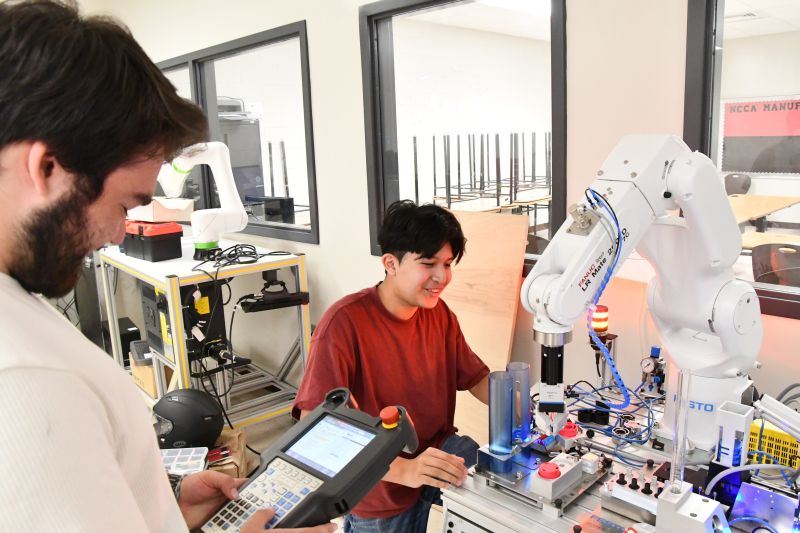
Overview
Humanoid robotics has transitioned from science fiction to a transformative reality. Over the past decade, advancements in artificial intelligence (AI), motion control, and material engineering have enabled the development of humanoid robots that can walk, talk, and even perform complex tasks. These robots are designed to mimic human form and behavior, making them ideal for roles in healthcare, manufacturing, entertainment, and beyond.
This blog explores the latest technologies driving humanoid robotics, their industry applications, and what the future holds for these incredible machines.
Technology Breakdown
Humanoid robots integrate several cutting-edge technologies to achieve their remarkable capabilities. Here's a closer look at the core components:
1. AI-Powered Motion Control
Motion control systems enable humanoid robots to move in ways that closely resemble human motion. Companies like Boston Dynamics and Tesla are pioneering this field with robots capable of maintaining balance, walking on uneven terrain, and even performing acrobatics.
Key innovations include:
- Dynamic Balance Algorithms: Allow robots to adapt to environmental changes in real time.
- Actuators and Sensors: Mimic human muscle movements with precision.
- Reinforcement Learning: Trains robots to improve their movement efficiency over time.
Image Prompt 1: A humanoid robot walking across rocky terrain, demonstrating balance and adaptability.
2. Advanced AI and Machine Learning
AI is the brain of a humanoid robot. By combining machine learning with neural networks, robots can process vast amounts of data, recognize patterns, and make decisions autonomously. For example:
- Tesla Optimus uses AI to learn tasks like picking up objects and performing repetitive factory work.
- Figure AI's humanoid robots focus on replicating human dexterity for intricate tasks.
Natural language processing (NLP) also enables humanoid robots to understand and respond to human speech, making interactions seamless.
Image Prompt 2: A humanoid robot interacting with a human in a smart home, responding to voice commands.
3. Human-Centric Design
Beyond functionality, humanoid robots are designed to be approachable. Their human-like form helps them integrate into environments where humans naturally operate, such as hospitals or retail stores. Innovations in lightweight materials, flexible joints, and lifelike exteriors make these robots both efficient and relatable.
Industry Impact
Humanoid robots are already making a significant impact across multiple industries. Here are a few notable examples:
1. Healthcare
In the healthcare sector, humanoid robots assist with patient care, rehabilitation, and even surgery preparation. Robots like Pepper and Grace offer companionship for elderly patients and help alleviate the workload of healthcare professionals.
2. Manufacturing
Humanoid robots are revolutionizing manufacturing by performing repetitive and physically demanding tasks. Tesla's Optimus robot, for example, is designed to handle assembly line duties, freeing up human workers for more strategic roles.
3. Entertainment and Education
From theme parks to classrooms, humanoid robots are becoming educators and entertainers. Robots like NAO and ASIMO engage audiences with interactive performances and lessons.
4. Search and Rescue
Humanoid robots excel in dangerous environments, such as disaster zones. Boston Dynamics' Atlas robot demonstrates how machines can navigate rubble and assist with rescue missions.
Image Prompt 3: A humanoid robot assisting a rescue team in a disaster zone, lifting debris to uncover survivors.
Visual Highlights
Humanoid robots are as visually striking as they are functional. Key examples include:
- Boston Dynamics' Atlas: Known for its agility and athleticism.
- Tesla Optimus: Sleek and minimalist, designed for factory and home use.
- Honda's ASIMO: A pioneer in humanoid robotics with an iconic design.
These robots showcase the intersection of engineering and artistry, making them fascinating to observe.
Conclusion
The future of humanoid robotics is bright, with advancements in AI, motion control, and human-centric design driving the field forward. From assisting in healthcare to navigating disaster zones, these robots are not just tools but partners in solving some of humanity's greatest challenges.
As we continue to refine their capabilities, humanoid robots will become an integral part of our daily lives, seamlessly blending into environments and enhancing human potential.
Related Topics
- Tesla Optimus
- AI-Powered Robotics
- Boston Dynamics Atlas
- Future of Humanoid Robots